
Too Many Obstacles
The deadline for candidates to appear on the 2026 Primary Election ballot is close of business on Tuesday, March 10. If a person wants to run for an elected office, the process can be daunting. There are Nomination Petition signature requirements, deadlines, and, often, filing fees.
We’ve been asked, “why do they make it so difficult? If someone wants to run, they should be able to get on the ballot.” Some PA legislators agree, and they introduced legislation to ease the burden on candidates.
What’s the current process and the reason for it? What do they want to change and why? What are the potential repercussions?
Running for Office – The Process
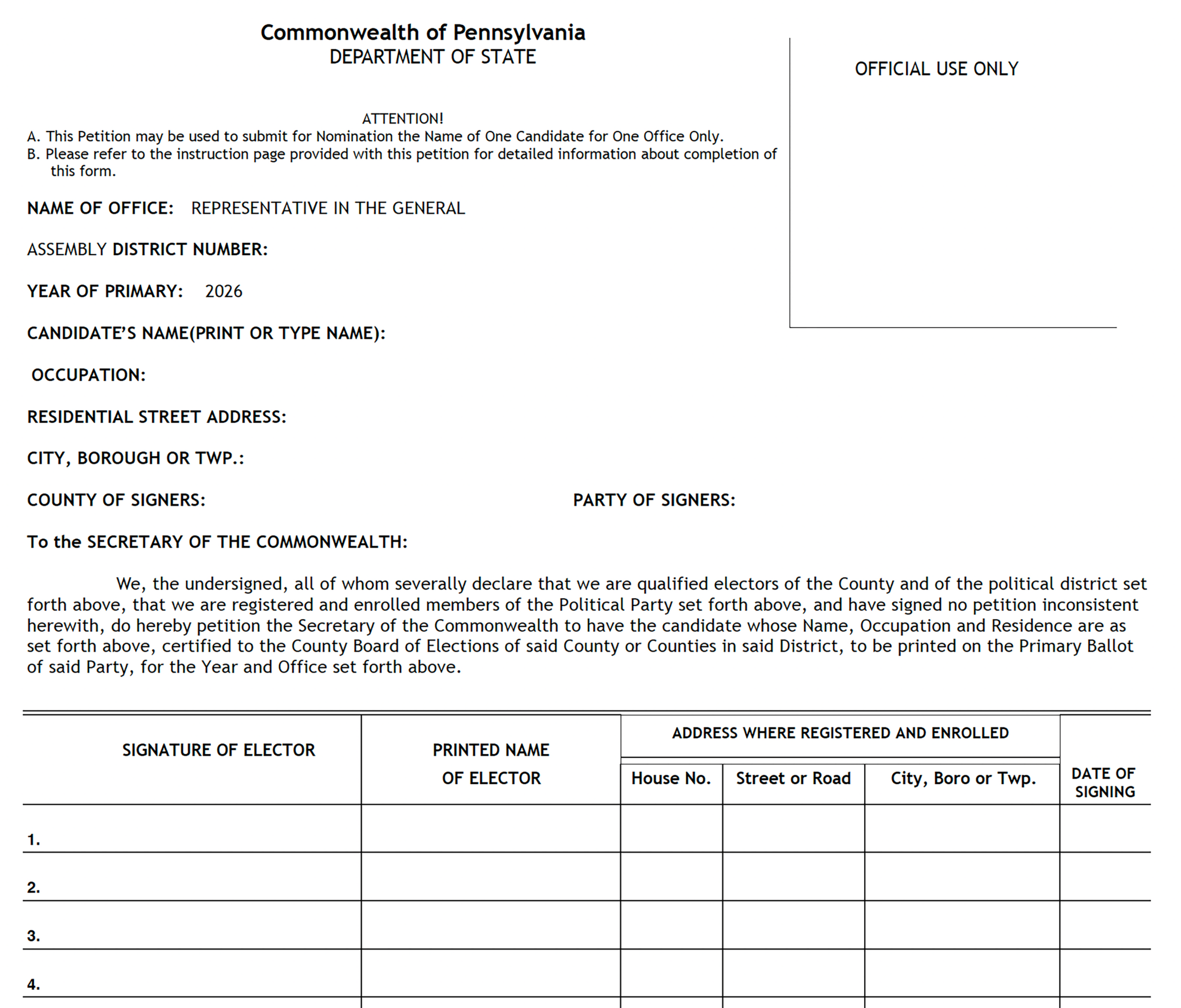
There are many elected positions on the ballot this year, including precinct/ward committee positions for the Democratic and Republican parties, state committee positions for the parties, PA State House Representative, PA State Senator, Lt. Governor, Governor, and U.S. Congress. Anyone who wants to appear on the primary ballot for one of the two major parties in Pennsylvania must file a Nomination Petition by the stated deadline either in Harrisburg for statewide positions or at the local Board of Elections office for local positions.
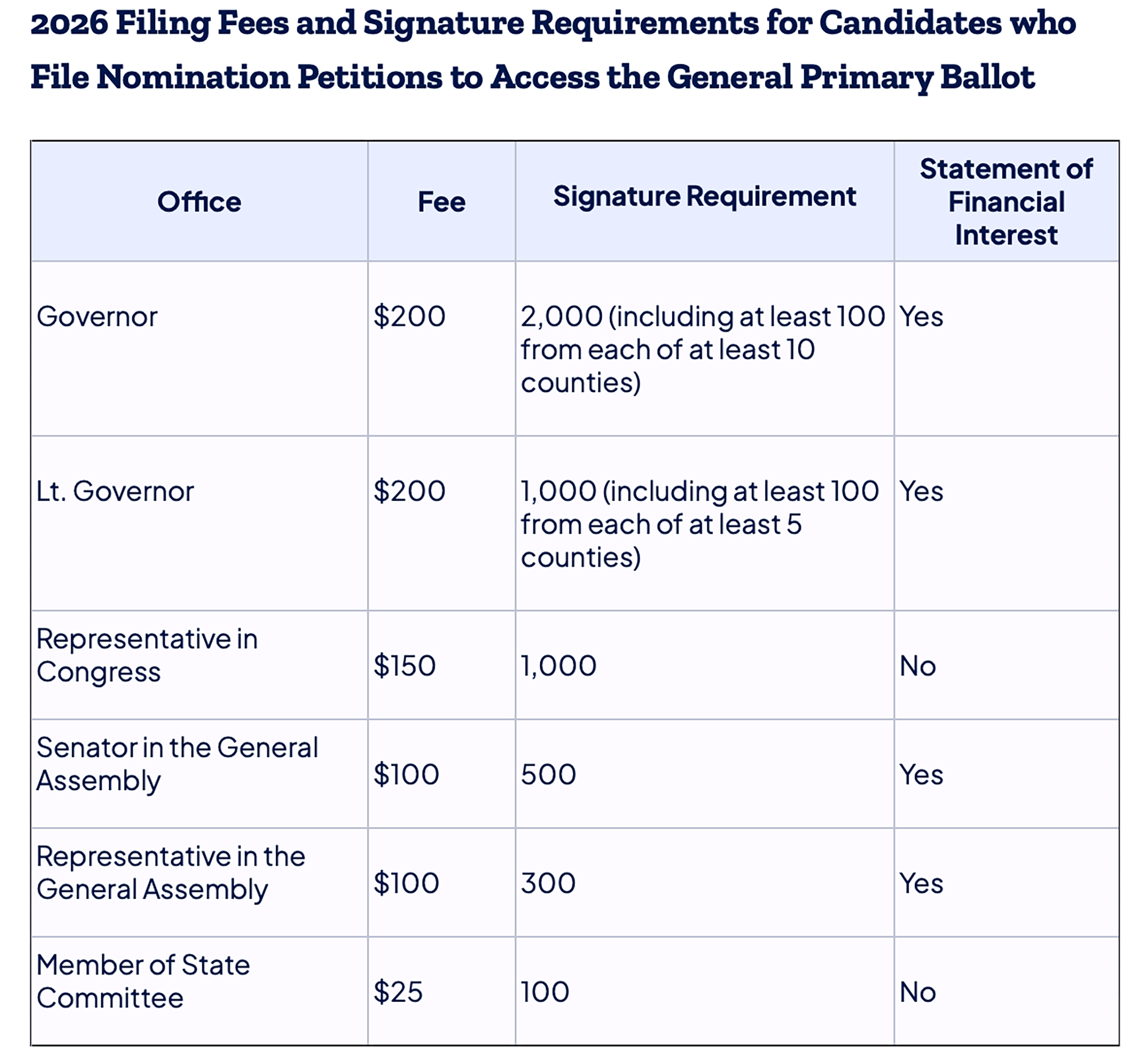
The petitions must be signed by registered voters who live within the geographic boundary of the position being sought (i.e. precinct, PA legislative district, Congressional district, etc.) and are of the same party affiliation as the candidate. The PA Election Code requires a minimum number of signatures for each elected office in order to have the candidate’s name placed on the ballot. In addition, Section 913 of the Code requires candidates for certain offices to pay filling fees to the Commonwealth of Pennsylvania. The current signature and filing fee requirements are shown below.
Running for Office – The Process
Proposed Changes
On February 13, 2026, Representative Ben Waxman (D) from Philadelphia’s 182nd District introduced legislation, HB 2262, entitled Making It Easier to Get on the Ballot. The legislation reduces the number of signatures required on the Nomination Petitions by half for each office and eliminates all petition filing fees.
Rep. Waxman believes revising the Election Code in this manner will “make running for office more accessible for potential candidates and will increase ballot diversity for voters.”
By removing filing fees and decreasing the number of signatures needed for a candidate to be placed on the ballot, the legislation will absolutely accomplish Rep. Waxman’s goal. However, is that really what we want?
Repercussions of Election Code Change
When the Pennsylvania legislature created the Election Code in 1937, they did so to standardize elections processes and establish rules for candidates and political parties.
Signatures
The reason candidates are required to obtain signatures from constituents is to prove support for their candidacy from the community. In order to win an election, candidates must be able to articulate the reasons they are seeking elected office and how they plan to accomplish their objectives. They need to raise money to effectively promote their candidacy and their positions. Often candidates will need volunteers to speak on their behalf about community or governmental issues. Collecting signatures on petitions is the beginning of a campaign and the first test of success in organizing, messaging, enthusiasm, etc. If a candidate cannot collect the required number of signatures on a Nomination Petition, then he/she may not have the necessary support of the community to actually get elected in the General Election.
If HB 2262 becomes law and many candidates’ names are placed on the ballot due to lower thresholds, this could cause chaos or confusion for voters. People are used to having a few choices, but decreasing filing requirements could increase the number of candidates exponentially.
Do you remember the PA Gubernatorial and Lt. Governor Primary Election in 2022? The Democratic ballot had one choice for Governor and three choices for Lt. Governor, which was quite manageable for voters. However, the Republican Party had nine candidates for both Governor and Lt. Governor on the ballot. Many voters had no idea who some of the candidates were or what positions they held on issues. They were overwhelmed with the choices on the ballot and did not have the time to investigate every candidate. All these candidates met the current petition signature requirement; yet most still couldn’t build a campaign infrastructure good enough to bring them even close to winning. After the divisive Primary Election, the Republican nominee wasn’t able to garner enough support from the very factious electorate to win the General Election.
With more people on the ballot, voters will have to work harder to get to know the candidates in order to make informed decisions or they could simply vote blindly. The result of such electorate choices may be a nominee who is not prepared or capable of winning a General Election.
Filing Fees

The current filing fees are essentially the same as they were in 1937 having never been indexed for inflation. In today’s dollars, a $200 filing fee to run for Governor would be approximately $4,500. 2026 filing fees are only about 5-10% of their original real value. Legislators in 1937 set these filing fees high to ensure that only serious candidates, willing to put their own money on the line, would be able to submit Nomination Petitions to have their names placed on the ballot.
There are likely few potential candidates who are unable to pay the nominal petition filing fees today. The fees do not make running for office inaccessible, as Rep. Waxman alleges. Since the current fees do not serve the same purpose as originally intended, there seems to be little reason to retain the fee structure. As a result, Rep. Waxman may actually get bipartisan support to remove them!
Bottom line…
The idea of allowing anyone to run for office if he/she chooses is kindhearted but also shortsighted. In the search for the best party candidates, voters don’t just want several options; they want viable ones. They want candidates who represent their own values, beliefs, and ethics, and who are capable of doing the job they seek. By weakening the long-standing screening mechanism that ensures a minimum level of support for a candidate, this legislation risks flooding our ballots with unqualified and implausible choices. This could muddy the election waters making it more difficult for voters to identify the best candidates.
When Act 77 passed, changing the 1937 Election Code regarding absentee ballots and centralized tabulation, many believed (and still believe) that it made our elections less secure. Let us hope the legislature truly considers the potential impact of HB 2262 on our candidates, elections, and our Representative Republic prior to enacting another change.
As the Constitutional Convention ended in 1787, Benjamin Franklin was asked if the delegates produced a monarchy or a republic. Franklin replied, “A republic, if you can keep it.”
We are trying to keep this republic that we love and hold our representatives accountable to the people. Join us in that mission and share this Update with your contacts!