Are They Coming to Your Neighborhood?
Data centers are being discussed everywhere from all levels of government to local fairs and coffee shops. Although these facilities have existed for decades, they now seem to be popping up in suburban areas.
In Pennsylvania, billions of dollars are being invested to build these computer warehouses, including $20 billion by Jeff Bezos for Amazon data centers. However, citizens have many questions about this new phenomenon being proposed in communities around the commonwealth.
What is being stored in the data centers? How are building locations selected in the commonwealth? What zoning codes or legislation exists or is being proposed regarding these structures? What can the average concerned citizen do?
Artificial Intelligence and the Cloud

The use of Artificial Intelligence (AI) for summarizing complex texts, creating graphics for advertising, or researching information by businesses and individuals is exploding.
Gone are the days of using a physical encyclopedia to obtain information. We search for knowledge on the internet, where the first responsive item listed on most browsers is most likely AI generated.
After the research is done, the advertising campaign is launched, and financial reports are approved, we save the information on our computers, laptops, tablets, etc. Those devices are backed up on external drives, company servers, or “the cloud.”
How many smartphones and laptops are backed up automatically to the cloud? How much personal information is being stored in the cloud? Where is this ethereal cloud?
All those questions, answers, documents, graphics, etc. generated by AI and all the backed-up spreadsheets, photos, contacts, etc. from computers, laptops, and smartphones are stored in large computer servers which must be physically housed somewhere. Those server homes are called…data centers.
Location Selection

As discussed in this November 11, 2025 article on AI, many of the large tech companies including Microsoft, Google, Meta, and Amazon need data centers to house their AI and other company initiatives. In selecting a location for a data center, companies consider the following:
- Consistent power sources
- High speed broadband/internet reliability
- Natural disaster risks (i.e. earthquake, flooding, etc.)
- Local zoning and permitting
- Cooling infrastructure (many use water)
- Security measures (i.e. protection of private data from cyber threats)
- Proximity to end users
Zoning, Permitting and Legislation

As indicated above, companies must consider state and local regulations prior to choosing a location for a data center. Once a location is chosen, then local municipalities are engaged to discuss permitting for the project.
When a suburban location is selected, the companies often seek zoning variances. These requests are heard by planning and zoning officials in meetings attended by very few members of the public. Once the residents become aware of a proposed data center site, especially one proposed in a residential area, there is often pushback at township Planning Commission and Board of Supervisor meetings. A recent example of this occurred in East Whiteland Township, when so many residents attended a planning commission meeting that the board postponed and moved the meeting because the number of attendees exceeded the room’s capacity.
As part of the initial permitting phase, large companies such as Microsoft often require municipalities to sign non-disclosure agreements (NDAs) in an effort to limit discussion of project details and to maintain confidentiality. However, those agreements also keep vital information from the public who may have legitimate questions or concerns about the project. Recently, Microsoft decided to end its practice of requiring local governments to sign NDAs in an effort to increase community transparency.
The PA legislature is not counting on other companies to follow in Microsoft’s footsteps. Rep. Joe Ciresi (D-Montgomery) introduced HB 2359 which prohibits state and local governments from entering into NDAs for data center development. Sen. Tracy Pennycuick (R-Berks/Montgomery) is crafting similar legislation in the Senate in an effort to provide communities with a voice in this very important topic. It is great to see a bipartisan effort to promote public transparency!
What’s Next?
Residents need to attend local government meetings to understand the issues and developments arising in their communities and then make their opinions and concerns known to their elected officials. This is important not just on data center development but on other potentially controversial matters.
Governor Shapiro announced on May 27, 2026 that he refined the Governor’s Responsible Infrastructure Development (GRID) Standards to include data center development. If companies want the state’s support, then they must meet those standards.
Similarly, it is strongly recommended that municipalities draft ordinances pertaining data centers in the event one comes to the region. Cities and townships should address the concerns of their residents in such ordinances. Water consumption, energy usage, noise levels, and decommissioning data centers are among some top issues that must be addressed locally.
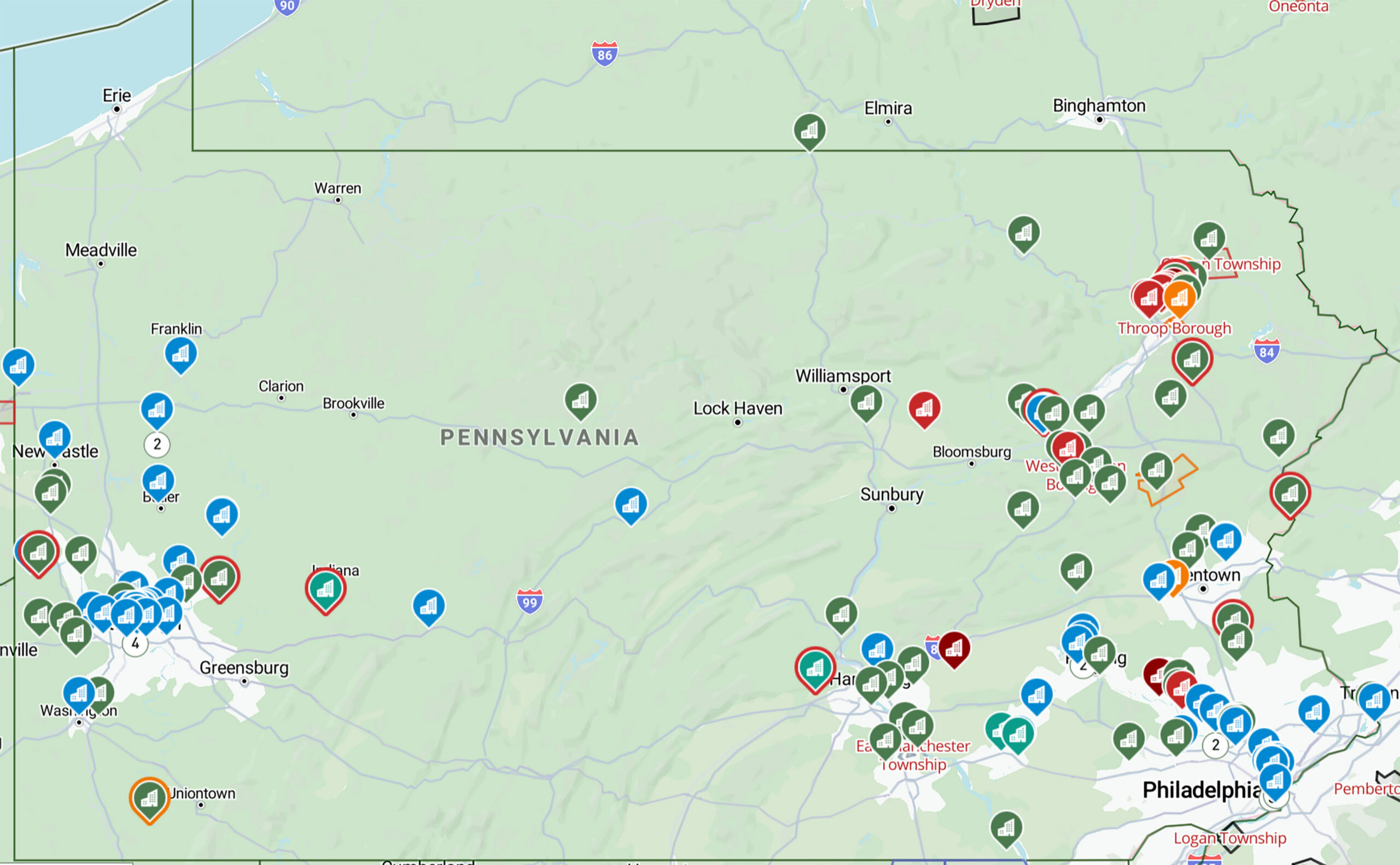
People can go to trackdatacenters.com to get information on proposed and completed data centers throughout Pennsylvania.
Bottom line…
People in this country are not going to stop using the internet, AI, smart phones, etc. Therefore, data centers are needed and are here to stay, at least until someone develops a way to store all that data on a USB stick. Until then, the public needs continued transparency from its local and state government officials regarding decisions that may adversely affect the community.
Community members must also engage with the local governments before decisions are made. Complaining about the development of a data center after zoning variances and permits are approved is too late. We can demand transparency, but if no one shows up to see the presentations, participate in discussions, or ask the questions, does it really matter? We can’t always assume that someone else will handle matters the way we would want. As Mahatma Gandhi once said, “The future depends on what you do today.”
As the Constitutional Convention ended in 1787, Benjamin Franklin was asked if the delegates produced a monarchy or a republic. Franklin replied, “A republic, if you can keep it.”
We are trying to keep this republic that we love and hold our representatives accountable to the people. Join us in that mission and share this Update with your contacts!