PA Supreme Court Decides – Fee or Tax
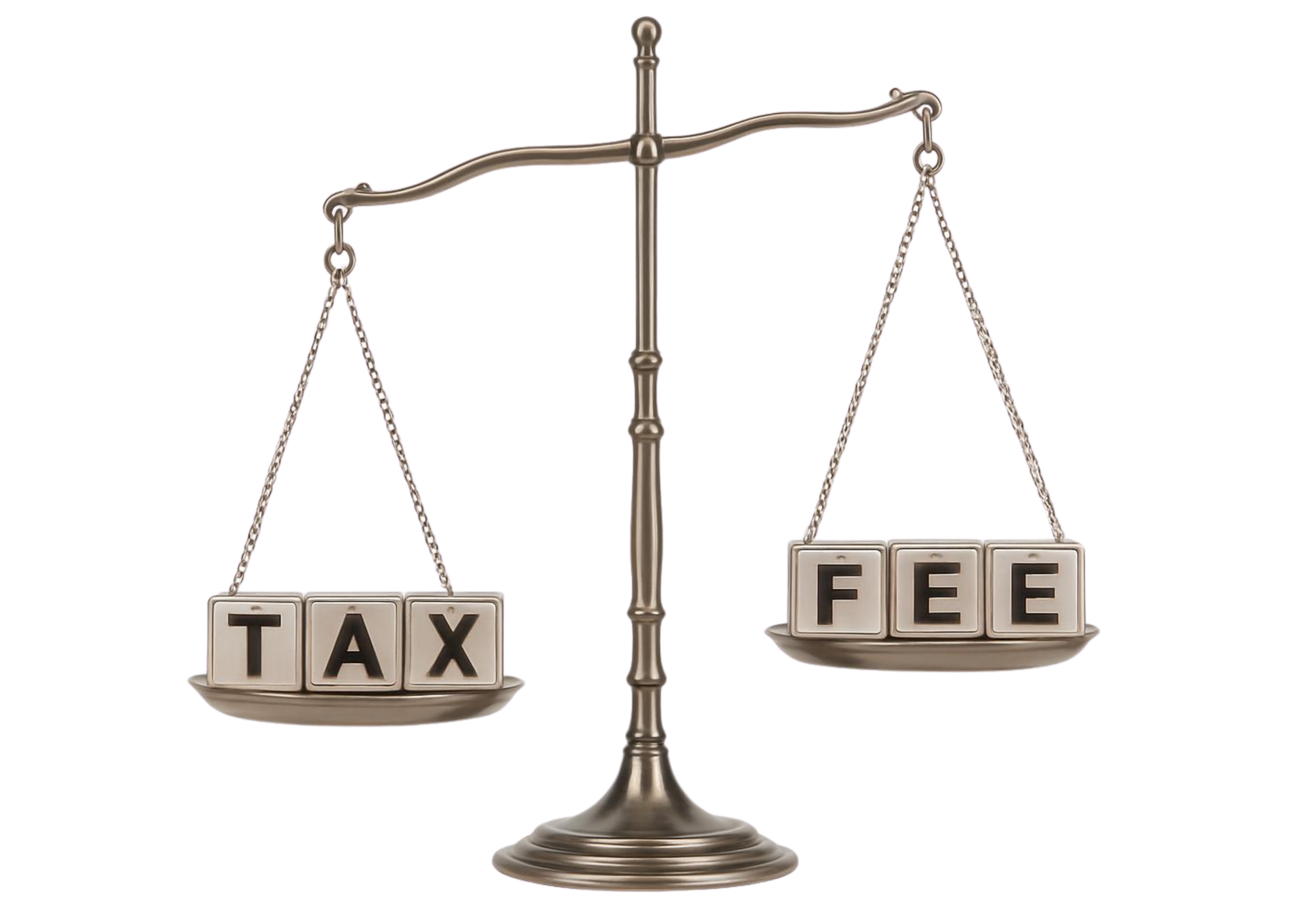
Nearly 10 years after West Chester Borough Council adopted Ordinance No. 5-2016 imposing a “stream protection fee,” also known as a stormwater management charge, on its residents, the PA Supreme Court decided that the charge is actually a tax.
What’s the difference between a fee and a tax? Why did West Chester Borough file a lawsuit to recover the fee? Why are residents upset?
Stormwater Tax
The terminology used in West Chester Borough’s ordinance was deliberate: a fee, not a tax. The largest institutional landowner in West Chester Borough is West Chester University – a nonprofit and exempt from tax. The Borough called this charge a fee to get around the non-tax status of its largest property owner. It was a move welcomed by residents who often resent the university’s status and it not paying it’s “fair share” of the increasing municipal expenses. The costs are usually incurred solely by the homeowners and businesses.
For a few years the University refused to pay invoices for said fees, believing them to be a tax from which the entity is immune. As a result, West Chester Borough filed a petition with the Commonwealth Court seeking a declaratory judgement that West Chester University must pay the fees for the services provided. The Borough claimed that it charged a fee for providing the service of managing all aspects of stormwater for the University so it did not need to monitor its many impervious surfaces, storm drains, etc. However, the University claimed that it was not a service they requested and that the Borough was completing the work for the entire municipality, which constituted a tax.
The Commonwealth Court ultimately sided with West Chester University when it held that because the stormwater management fee “yields a common benefit shared by residents of the Borough generally…the Stormwater Charge constitutes a general tax.” West Chester Borough appealed the ruling to the PA Supreme Court. It affirmed the decision primarily based on the notion of benefits.
While a tax is imposed to support the functions of a government entity that gives citizens a common benefit, a fee may be charged in a contractual manner where a specific and non-compulsory service is provided to individuals. For example, in West Chester the building permits, rental permits, and parking permits all have fees attached to them with individuals receiving benefits. Whereas the real estate tax, the earned income tax, and the local services tax all are applied to the General Fund which pays for police, fire, parks, and administrative costs among other things. These benefit the entire community, not just one individual or business.
Since 2015 a local citizen activist has warned about the “rain tax” that municipalities are trying to impose on citizens. When asked about the recent court ruling, Margie Swart replied, “West Chester Borough’s stormwater ‘fee’ is really a tax dressed up in different clothing. The Supreme Court’s ruling confirms the concern I raised back in 2015: when a charge functions like a tax, it should be treated like one.”
The stormwater management is clearly a benefit to the general public as opposed to every specific residence, business, property, etc. Therefore, it’s a tax that now must be borne only by borough taxpayers.
Bottom line…
Like most colleges located in residential areas, West Chester University impacts West Chester Borough and its residents both positively and negatively. It provides tourism and labor to the community, but it also uses resources, receives perks, and brings young adult havoc (i.e. noise, property damage, traffic, etc.) to the area. Residents are rightfully frustrated that they bear the tax burden for the university’s presence.
As with the leadership in any university town, the West Chester Borough Council needs to better balance the needs of the homeowners and local businesses with those of the college. Like many municipalities, the Borough needs to do a better job of managing its resources and tax dollars. As is evidenced by the emigration from California, when people and businesses are taxed beyond reason, they can move! Watch out West Chester!
As the Constitutional Convention ended in 1787, Benjamin Franklin was asked if the delegates produced a monarchy or a republic. Franklin replied, “A republic, if you can keep it.”
We are trying to keep this republic that we love and hold our representatives accountable to the people. Join us in that mission and share this Update with your contacts!