Down From 38th Just A Year Ago
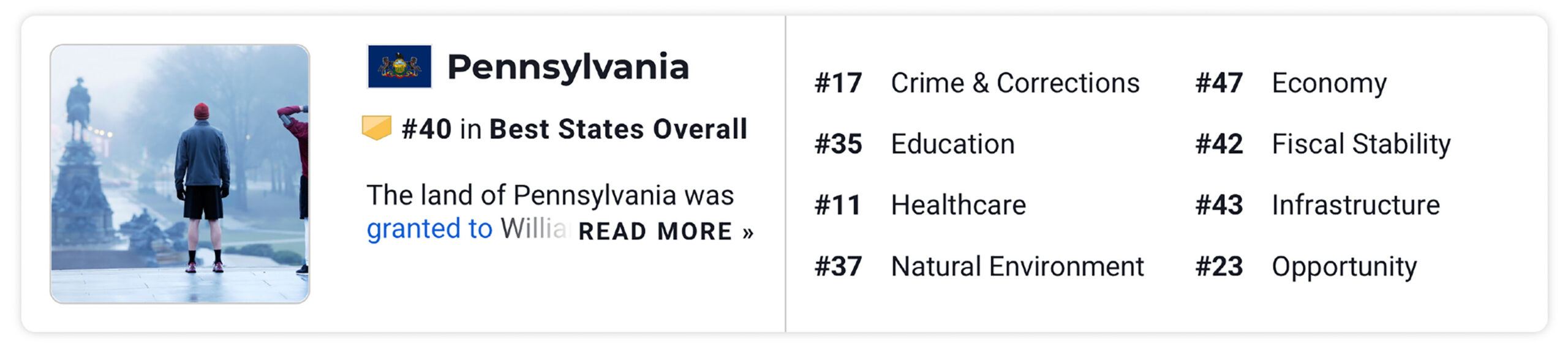
A recent survey released by U.S. News and World Report ranked states according to how well they are performing for their citizens. The study included factors such as crime, infrastructure, opportunity, and natural environment, but education and healthcare were weighted more heavily based on their importance to respondents.
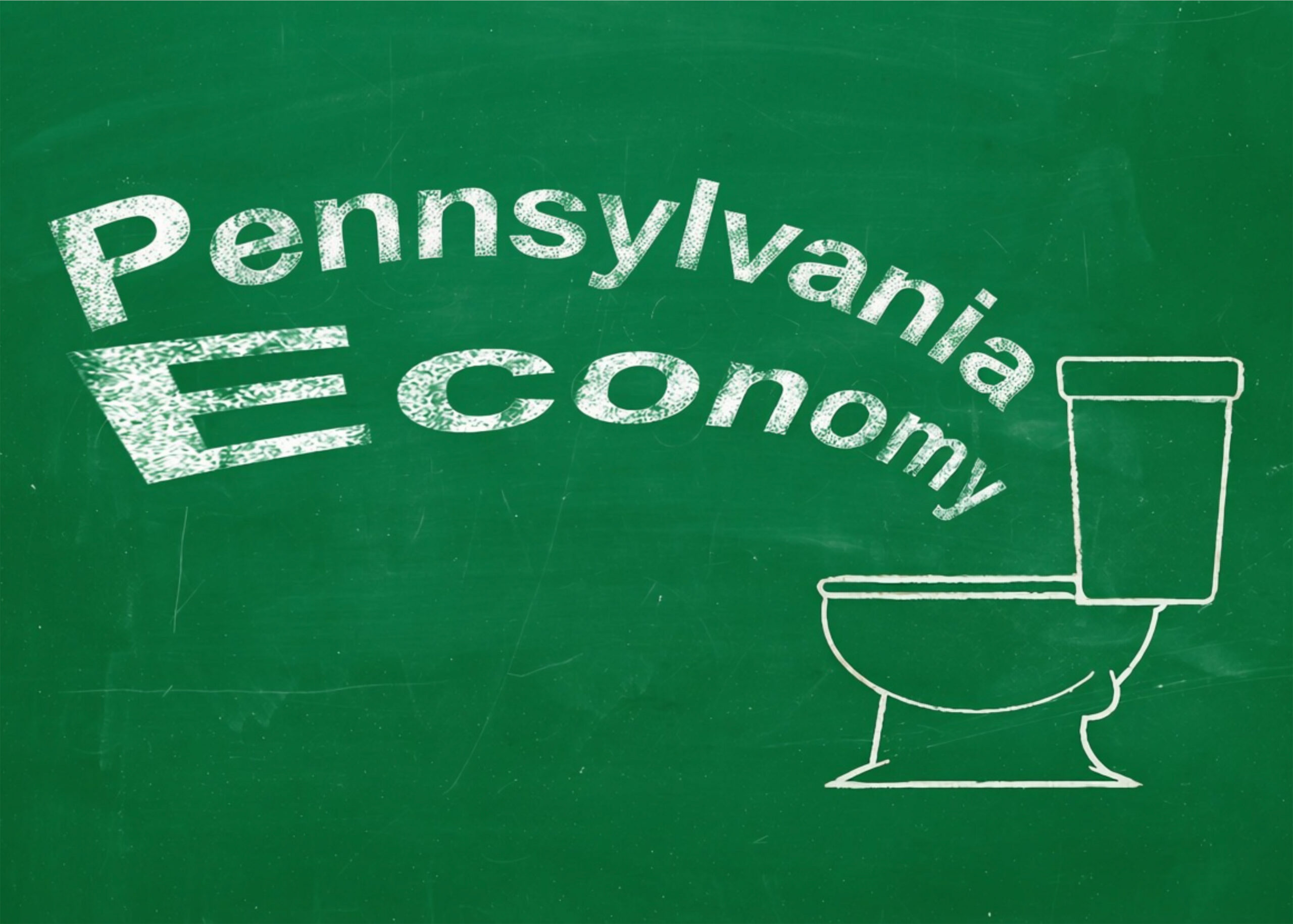
In 2026, Pennsylvania came in at #40 overall and #47 for its economy. Just one year ago, the Commonwealth’s economy was ranked as #38 by the same U.S. News survey. A sharply declining economy, and one that is close to the worst in the nation, signals a need for evaluation of strategies and policies at the state level. In other words, how did this happen and how can we pull the PA economy out of the toilet?
Pennsylvania Policies
Pennsylvanians have seen a 9.4% growth in the state budget and spending over the last four years, which is just over $4 billion. The increased appropriations were directed mostly to education and human services with new programs and initiatives put into place.
The legislature provided targeted tax credits for lower income and working families in the last four state budgets. However, tax credits are not the same as tax cuts, which immediately put money into the pockets of residents.
The last reduction in any state tax occurred when Governor Wolf signed Act 53 in 2022, which reduced the corporate income tax over multiple years from 9.99% in 2022 to 4.99% in 2031. The purpose of dropping the corporate tax from the second highest in the country was to become more competitive in attracting businesses to the commonwealth. Businesses that invest in Pennsylvania create jobs, produce products and services, and ultimately can improve the economy.
Although decreasing corporate taxes is beneficial to businesses and may attract some, many companies claim that state regulations are impeding their growth. The volume, complexity, cost, and unpredictability of permitting, environmental, and labor and employment regulations are cited as obstacles to operating a business and discourage investment. As a result, the PA Chamber of Business and Industry is currently advocating for permitting reform with the Shapiro administration.
These policies led us here:
Economic Advice
The Heritage Foundation’s Chief Economist, E.J. Antoni, recently appeared on The Conservative Voice on WWDB-860AM and was informed about the Pennsylvania ranking. He shared his advice to elected officials on how to kick the state’s economy into gear.
“If in Pennsylvania they want to revitalize the economy, increase economic growth, and increase economic opportunity for Pennsylvanians, the legislature and the governor need to reduce spending, reduce regulation, reduce taxation. In short, the government needs to start getting the heck out of the way for people who know how to create wealth so that those people are again free to do so,” stated Mr. Antoni.
Taking the recommendations one at a time, we’ll start with the need to reduce spending. The last time Pennsylvania actually reduced spending, or decreased its budget from one fiscal year to another, was in 2011 when Governor Corbett cut $1.17 billion from the 2010 budget. Over the last 15 years, spending either stayed the same year over year or increased. What is the result? More government programs are created or expanded that are funded by the taxpayers. In simple terms, it’s a growth of government and spending. That’s the exact opposite of the expert’s advice.
Turning to the idea of reducing regulation, Governor Shapiro has taken steps to streamline regulations and make the process faster for businesses. Some progress has also been made on removing outdated regulations. However, no effort has been made to reduce the overall number of regulations or to remove one regulation for each new one created. That’s suggestion number two from the expert that hasn’t been executed.
Finally, as discussed previously, corporate taxes are decreasing each year, but individual taxpayers and families have not seen a tax cut for more than two decades. The personal income tax rate of 3.07% has been in place since 2004. The state’s 6% sales tax was established in 1968 with no change in 58 years. With that, we are three for three!
According to E.J. Antoni, the policies enacted by the elected leaders in Pennsylvania will not create a dynamic economy or revitalize a floundering one.
Bottom line…
When employees are unable to successfully complete their assigned responsibilities, the employer gives training and time in hopes of improved proficiency. However, if the job is still not being done effectively after that, the time comes when the employer needs to find a more skilled worker.
If the expectation is more of the same on the economy, taxes, spending, regulation, etc. and nothing different is demanded from our state legislators and governor, then Pennsylvanians will get exactly what they expect. And the outcome will be deserved.
We elect the legislators and governor of Pennsylvania, but they are paid by taxpayers to perform their jobs to benefit the citizens. If people want a different result, an improved economy and opportunities in Pennsylvania, then it may be time to find more skilled employees.
As the Constitutional Convention ended in 1787, Benjamin Franklin was asked if the delegates produced a monarchy or a republic. Franklin replied, “A republic, if you can keep it.”
We are trying to keep this republic that we love and hold our representatives accountable to the people. Join us in that mission and share this Update with your contacts!