Good News for Pennsylvania Voters
Pennsylvania Auditor General, Timothy DeFoor, released the findings from his department’s audit of the Pennsylvania Department of Transportation (PennDOT) and the Governor’s Office of Administration on Friday, April 17, 2026. Specifically, the audit’s focus was the Motor Voter process, including the recently implemented Automatic Voter Registration.
There are four ways by which people can register to vote or change their registration information: online, by mail, in person at the local election office, and at a PennDOT Photo License Center. This was not a review of all the methods of voter registration nor of the full Pennsylvania voter roll which resides in the Department of State’s Uniform Registry of Electors (SURE) database. This audit only focused on the processes used by PennDOT to accept voter registration information.
PennDOT collects the individual’s information, including citizenship, age, and residency status, prior to issuing a driver’s license. The Department of State (DOS), which is in the Governor’s Office of Administration, uses that same collected information when processing voter registrations. As a result, both departments were subjects of and participated in the audit.
We will examine the history of the Motor Voter process as background for the audit, the objectives, scope and findings of the audit, as well as a few interesting facts revealed in the audit report.
Motor Voter History
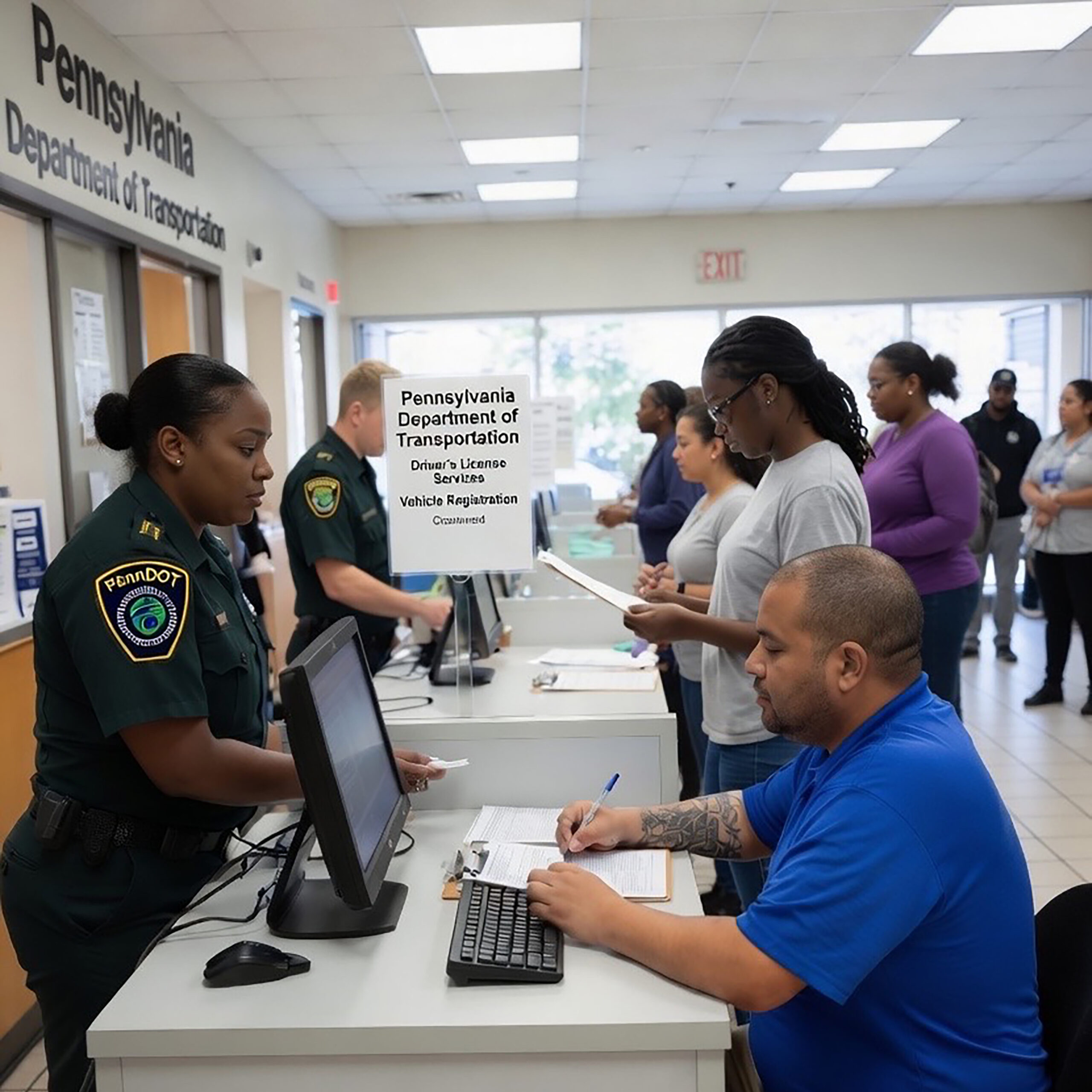
- 1995– the Motor Voter Law was incorporated into the PA Election Code and required PennDOT to offer voter registration forms to people applying for driver’s licenses.
- 2003 – the first voter registrations were filed electronically from PennDOT to the Department of State.
- 2003 – 2016 – a touchscreen offered everyone getting a driver’s license the opportunity to register to vote. That resulted in an unknown number of non-citizens who registered to vote according to this 2017 Associated Press article.
- 2016 – PennDOT added a yes/no question about U.S. citizenship to the registration process. If a person answered, “yes,” then the voter registration prompts were engaged. If the answer was “no,” then the person was unable to register to vote. However, this process was still on the honor system, depending on the applicant to be honest about citizenship.
- September 2023 – the Automatic Voter Registration (AVR) process was initiated at PennDOT whereby only eligible individuals were provided a screen to apply for or make changes to a voter registration. It was this process that piqued the interest of legislators and ultimately led to the Auditor General’s audit.
Audit Objectives/Scope

The audit, which took a year and a half to complete, had two objectives:
1) Ensure that the Motor Voter process follows all aspects of the National Voter Registration Act, the PA Election Code, and other statutes and department policies; and
2) Determine if the voter registration files sent from PennDOT to the DOS for processing properly exclude non-citizens.
After signing three different non-disclosure agreements, the Auditor General’s office focused on the vendor-managed application used by PennDOT workers in administering the voter registration process. The auditors reviewed information technology and controls of the system and the 210,905 voter registration applications that were transmitted to the DOS for the period January 1, 2024 through June 30, 2024.
Findings/Remedies

In general, the systems put in place by PennDOT and the DOS seem to effectively identify Immigration and Naturalization Service status, i.e. citizen, non-citizen resident, etc. In only one circumstance was a non-citizen provided the opportunity to register to vote.
Two findings were noted in the Auditor General’s report:
1. PennDOT improperly transmitted one voter registration application of a non-citizen to DOS for processing;
2. Employee user access controls over PennDOT’s vendor-managed application that supports the Motor Voter process were deemed insufficient.
Finding 1: Due to a human input error by a PennDOT employee, an individual’s record was incorrectly coded as “citizen,” rather than “non-citizen.” As a result, the automatic voter registration prompts were provided to the individual, who completed them. As indicated in the report, “Although the Photo License Center staff became aware of the error and corrected the information in [PennDOT’s system] and on the driver’s license, the staff could not cancel or void the application to register to vote in the vendor-managed application, which allowed it to be transmitted to DOS.”
Response: PennDOT and DOS will work together to update systems and improve communication channels between departments to more effectively allow for corrections to be made when errors are discovered by Photo License Center personnel.
Finding 2: Although PennDOT’s vendor implements the security controls over its system, it is PennDOT and the DOS who are responsible for implementing controls over authorized users of the system. The auditors were concerned that PennDOT employees are given access to this system when they are hired for a position that demands its use. However, there are no controls in place to review system access if an employee’s role changes in the department. Access is not removed until 30 days after employment ends.
Response: Neither the DOS nor PennDOT believed this finding to be an issue. However, both departments will review their user access protocols to ensure they are effective and prohibit unauthorized access of systems.
Interesting Facts
Information was revealed in this audit that some may not know:
- PennDOT retains copies of birth certificates and other documentation provided with a PA Driver’s License Application;
- Driver records have an Immigration and Naturalization Service (INS) indicator which show residency status as follows: “P” means permanent resident non-citizen, “T” means temporary resident non-citizen, “N” means naturalized citizen, and “null” stands for U.S. citizen;
- Bar codes on the PA Driver’s License link to the driver’s record, including the INS indicator. Therefore, an authorized agency, i.e. PennDOT, DOS, police, etc. can very easily identify if someone is a citizen or not.
Bottom line…
PennDOT and the Department of State seem to have implemented a system that securely and effectively manages the Motor Voter law. Although non-citizens were able to register to vote in prior applications of the PennDOT process, continued concerns about this issue should be alleviated by this audit report. In fact, since actual documentation is required prior to an individual being allowed to complete an application, this may be the safest method of voter registration that Pennsylvania uses. No other registration method, i.e. paper, online, or in person at an election office, requires documentation up front.
Thanks to the PA legislators who pushed for an audit of the Motor Voter process. And, thanks to the Auditor General for his comprehensive report. Now, he should get to work on an equally comprehensive audit of the Department of State’s election processes, directives, and database of registered voters. Such a report would go a long way toward improving voter confidence in Pennsylvania elections.
As the Constitutional Convention ended in 1787, Benjamin Franklin was asked if the delegates produced a monarchy or a republic. Franklin replied, “A republic, if you can keep it.”
We are trying to keep this republic that we love and hold our representatives accountable to the people. Join us in that mission and share this Update with your contacts!