
Balanced Representative Government or Oligarchy?
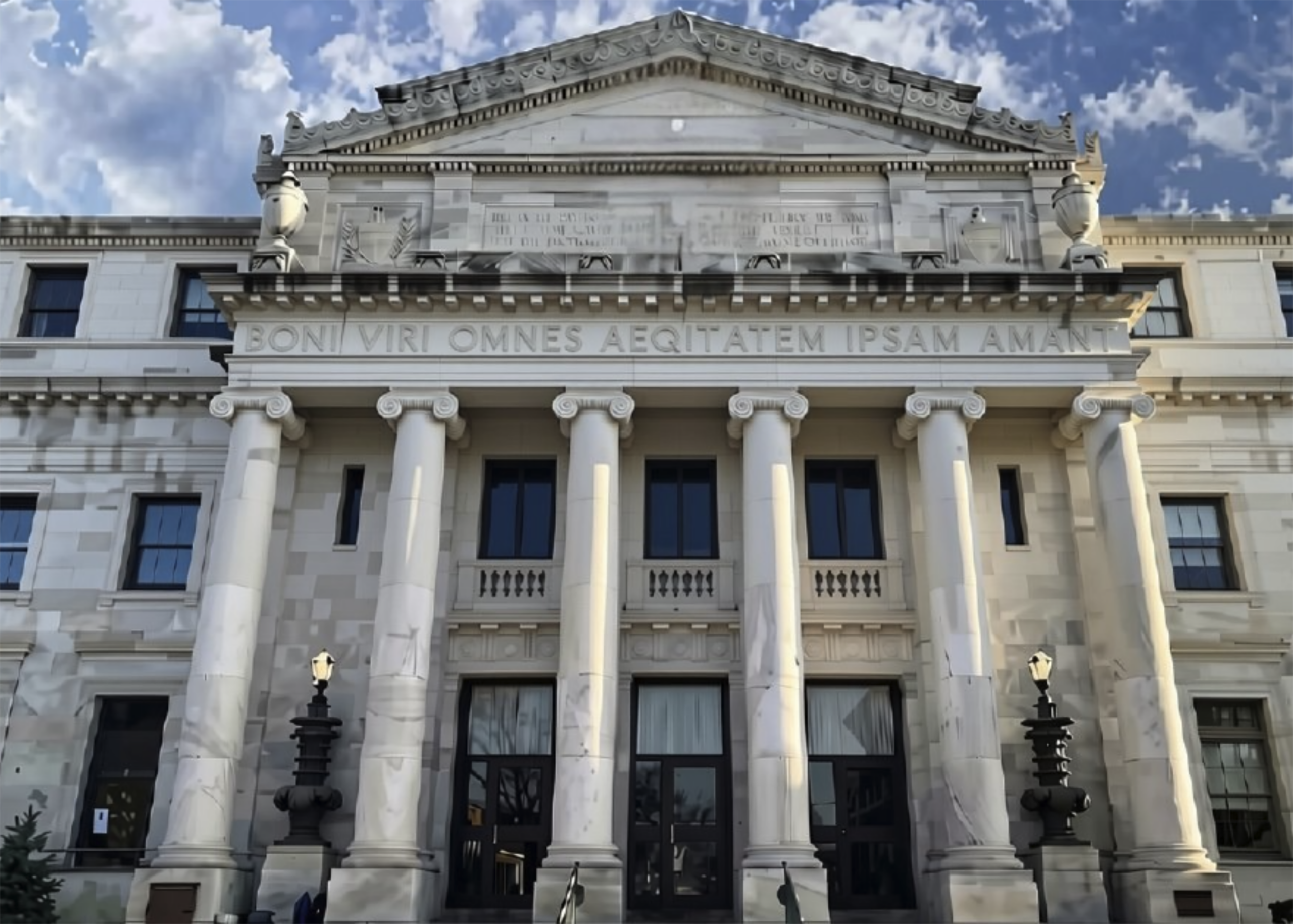
250 years ago, our country’s founders established a Constitutional Republic and hoped that we could keep that form of government. Today, it still stands as we elect our representatives to conduct the country’s business at the national, state, and local levels. However, some local governments in Pennsylvania are run more like oligarchies, not the representative republic envisioned by our forefathers. Delaware County is a perfect example, and some community members are now trying to correct that.
Home Rule Charter
History
In 1952 the City of Philadelphia was the first and is still the only large Pennsylvania city to establish a Home Rule Charter, which functions much like a local constitution. Twenty years later, the state legislature passed the Home Rule Charter and Optional Plans Law of 1972 which permitted counties and municipalities to establish similar governance.
In 1973 Delaware County voters decided to create a Government Study Commission and elected the 11 commission members (6 Republicans and 5 Democrats). Just two years later, Delaware County became the first eligible county in the state to form a county government under a Home Rule Charter, when voters approved the measure in May of 1975. Prior to that, the county could only exercise the powers given to it by the PA legislature under the County Code.
Provisions and Impact
The purpose of Delaware County’s Home Rule Charter as indicated in its preamble was to “accept the grant of power of self government” that was offered in the 1972 law. Delaware County’s Home Rule Charter vests governing authority to a 5-member County Council, each member of which is elected from the county at large to a 4-year term. Members must be registered to vote, have lived in the county for at least two years, and are limited to serving two full terms in that office. Unlike the Philadelphia charter, there is no provision for minority party representation on the County Council.
Delaware County’s move from it’s original 3-member Board of Commissioners as required by PA County Code to a 5-member County Council was intended to do three things:
1. Broaden representation and experience in modern county government that was becoming too complex for a 3-member board;
2. Separate legislative and administrative responsibilities – the larger council could focus on policy-making, while day-to-day operations could be delegated to a county administrator;
3. Increase local flexibility in making ordinances and greater local control over administration.
Although the removal of the minority representation was not an objective of the Government Study Commission, it was one of the results of the county’s Home Rule Charter. Currently, Delaware County is run by five members from a single political party.
Southeastern Counties
Delaware County is one of only three counties in the Commonwealth of Pennsylvania that does not require minority party representation either through a home rule charter or through state law. The others are Allegheny County and Luzerne County. Neighboring counties in southeastern Pennsylvania follow either state or home charter guidelines to affect a minority position on the governing bodies.
BUCKS, CHESTER, and MONTGOMERY COUNTIES: follow PA County Code rather than have a Home Rule Charter. The code requires a 3-member Board of Commissioners where people may only vote for two candidates, thus assuring a minority party representation on the board.
PHILADELPHIA: follows its Home Rule Charter which established the mayor as the executive branch and a city council as the legislative branch of the city’s government. The city council is comprised of 17-members: 10 District Councilmembers (elected from geographic districts) and 7 At-large Councilmembers (elected city wide). There is a limit of 5 at-large members from any one party, thus requiring representation of at least two minority party members.
Amending DELCO’s Charter
During this 250th anniversary year, some in Delaware County want to bring the county governance back in line with the founding fathers’ vision. Currently, petitions are being circulated to add a referendum to the November 3, 2026 ballot. Petitions with over 25,000 signatures of registered Delaware County voters are required to be filed with the Department of State by August 4th to add the referendum to the ballot. If successful, the voters will decide if the county should amend the Home Rule Charter to require minority party representation on the County Council.
The amendment to the charter would do the following:
- Expand County Council from 5 to 7 members;
- Maintain the countywide election of members, without requiring council members to reside in different regions of the county;
- Stagger the 4-year term elections so 4 members are elected one year and 3 members are elected in the next cycle;
- Apply limited voting – parties can only nominate and voters vote for the number of candidates that is one fewer than the number of open positions. Therefore, when there are 4 open seats, no more than 3 candidates from one party can be elected and at least one candidate from a minority party will be elected to County Council.
Signing a petition does not indicate support for the measure. It simply indicates support for the electorate deciding if Delaware County should give a voice in county government to the minority party.
Bottom line…
For over 50 years the Delaware County Home Rule Charter put the party with the most registered voters at an advantage with the potential of silencing everyone else. This year residents have the chance to right a wrong made years ago and join neighboring counties in giving minority parties a seat at the governing table. Our country was founded on the principle that governmental authority is derived from consent of the governed. Will Delaware County residents continue to consent to one-party ruled government or will they choose fair representation?
If you would like more information about signing the Delaware County referendum petition, please email us at info@keystonefbp.org.
As the Constitutional Convention ended in 1787, Benjamin Franklin was asked if the delegates produced a monarchy or a republic. Franklin replied, “A republic, if you can keep it.”
We are trying to keep this republic that we love and hold our representatives accountable to the people. Join us in that mission and share this Update with your contacts!