Declassified Documents and the Local Response
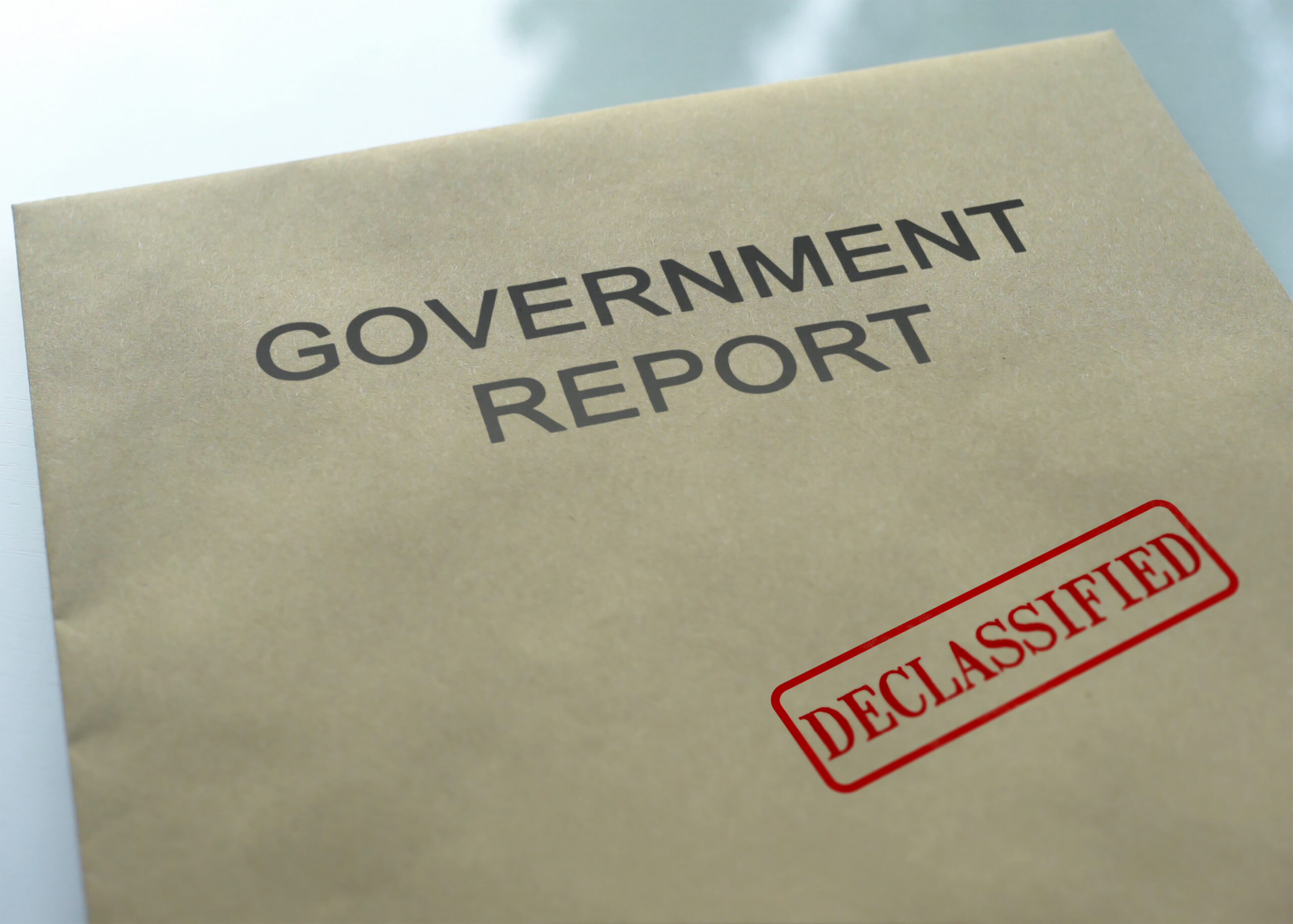
On July 16, 2026, the nation learned that America’s critical infrastructure had been compromised by cyber data theft, fraudulent activity, and federal employees who concealed these incidents from the President of the United States by removing them from his daily intelligence briefings. President Trump released declassified documents showing, among other things, that the personal information of 220 million voters was stolen from several states and that more than 250,000 non-citizens are registered to vote in four states. The nationwide total could be in the millions.
Some dismiss concerns about election security and inaccurate Pennsylvania voter rolls. Others have spent years working to identify and reduce those risks. This article examines the threats and highlights what local Pennsylvanians have done—and continue to do—to help safeguard election integrity.
The Threat

Data Breaches
Consider the data breaches at medical facilities, insurance companies, credit reporting agencies, and background check firms over the last decade. Now add the recently declassified breach of voter registration files from multiple states. The conclusion is frighteningly obvious: the personal information of hundreds of millions of Americans may now be in the hands of enemies of the United States.
With Social Security numbers, driver’s license numbers, birth dates, addresses, and other personal data, bad actors could apply for absentee ballots, create voter registrations in other states, change party affiliations, and more.
If bad actors can obtain this information, do you really think they can’t figure out how to use it to accomplish their goals?
Election Management Systems
Another cybersecurity concern is the election management systems used by counties and states. According to the Cybersecurity and Infrastructure Security Agency (CISA), election software and networks have vulnerabilities that must be patched quickly to prevent unauthorized access. Yet CISA warns that “structural constraints in the certification ecosystem significantly limit vendors’ abilities to patch systems quickly.” Many local election offices also lack the cybersecurity resources needed to defend against attacks. As a result, election systems with known vulnerabilities are often used in our elections.
If bad actors can hack government and corporate databases, do you really think they can’t exploit known software or network vulnerabilities to help accomplish their goals?
Non-Citizen Voters
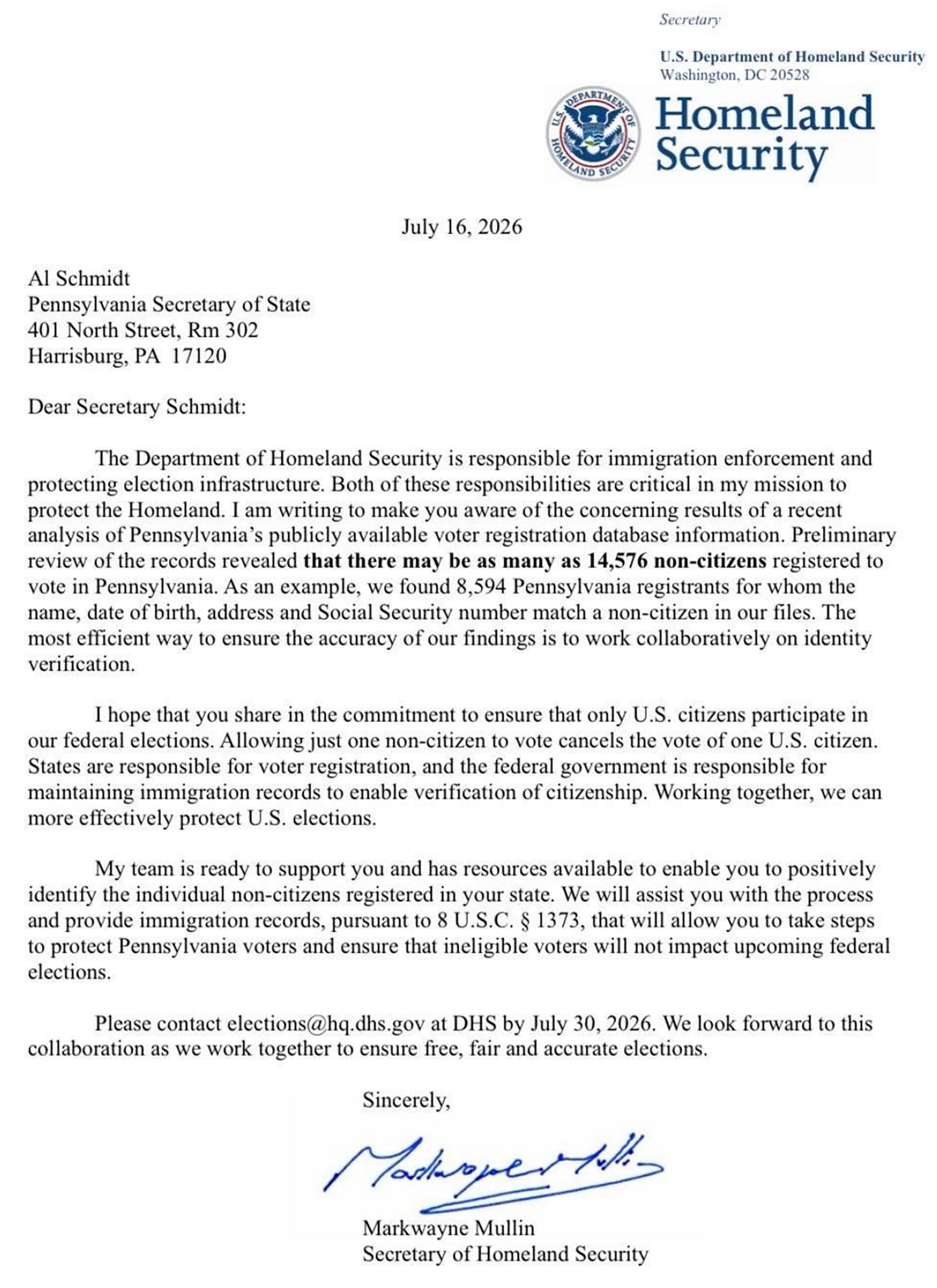
On July 17, 2026, Department of Homeland Security (DHS) Secretary Markwayne Mullin notified Pennsylvania Secretary of State Al Schmidt that a preliminary review of Pennsylvania’s public voter registration records identified as many as 14,576 registered non-citizens. Mullin noted that many states are removing non-citizens and deceased voters from their rolls using DHS’s Systematic Alien Verification for Entitlements (SAVE) Program.
According to USA Today, Schmidt responded, “While the Department has made clear that we cannot share Pennsylvanians’ private, personal information, we will review any information provided by DHS so that we can evaluate the validity of these claims.” Will he request the information from DHS and participate in the SAVE program? We hope so.
The DHS findings also raise questions about Pennsylvania’s voter registration process. Although applicants must provide a driver’s license number or the last four digits of a Social Security number, a 2018 Department of State directive instructs election offices not to reject an application solely because those identifying numbers do not match the applicant’s name.
If bad actors can steal driver’s license or Social Security numbers, why wouldn’t they use them to register people to vote in a state that doesn’t reject registrations with mismatched identifying information?
Citizen Efforts

Applications, Envelopes, and Ballots
To verify that applications for mail-in and absentee ballots—and the returned envelopes—showed no signs of fraud, Felice Fein of West Goshen Township sought access to the records from the 2023 primary election. Through a Right-to-Know request filed in July 2023, she asked for digital images or permission to inspect and photograph the documents. Chester County would allow photographs only if most of the information was redacted. What followed:
- Appeal to the PA Office of Open Records – Fein wins full access.
- County appeals to Court of Common Pleas – Fein wins again.
- County appeals to Commonwealth Court – decision pending.
In August 2024, Diane Houser from Uwchlan Township filed a Right-to-Know request for digital copies of mail-in, absentee, and provisional ballots from the 2020–2023 general elections to verify ballot integrity and vote-count accuracy. Chester County denied the request. What followed:
- Appeal to the PA Office of Open Records – Houser wins full access.
- County appeals to Court of Common Pleas – Houser wins again.
- County appeals to Commonwealth Court – Houser wins again.
- County appeals to the PA Supreme Court – County wins; Commonwealth Court to reconsider.
Chester County’s determination to withhold these public records appears stronger than its commitment to allowing independent verification of election integrity.
Disqualified Jurors
A statewide effort is underway to identify non-citizens on Pennsylvania’s voter rolls by comparing them with county disqualified juror lists. Because all jurors must be U.S. citizens, anyone called for jury duty who is not a citizen is disqualified before serving. State law requires every county to maintain lists of prospective, qualified, and disqualified jurors. Under 42 Pa.C.S. § 4523, the disqualified juror list, including the reason for each disqualification, must be open to public inspection.
Once again, Chester County appears unwilling to fully comply with a public records request. When asked for the disqualified juror list, the Court Administration office provided only a partial list—not the complete record required by law. Will litigation again be necessary to obtain a public record, or will the county comply? Time will tell.
Moved Voters
An effort is underway to contact voters who have moved out of Pennsylvania but remain registered here. Some registrations stay on the voter rolls for eight, ten, or more years before counties remove them. Former residents can cancel their Pennsylvania voter registration by completing a simple form and returning it to their former county election office. Doing so helps keep the voter rolls accurate.
If you’d like to help with this effort, please contact us at info@keystonefbp.org.
Bottom line…
America’s election system faces growing threats from cyber intrusions, inaccurate voter registration records, and a lack of transparency that undermines public confidence. Recent declassified information, cybersecurity warnings, and ongoing public-records disputes highlight vulnerabilities that deserve serious attention.
Across Pennsylvania, concerned citizens are using public records requests, legal action, and voter-roll maintenance efforts to verify election records, improve the accuracy of voter registration files, and strengthen election integrity.
Secure elections depend on accurate records, transparency, and public accountability. Government employees and elected officials entrusted with protecting our nation had a duty to identify, disclose, and address threats to critical data. By failing to sound the alarm and allowing these vulnerabilities to persist, they failed the American people and compromised public trust. Those responsible must be held accountable.
As the Constitutional Convention ended in 1787, Benjamin Franklin was asked if the delegates produced a monarchy or a republic. Franklin replied, “A republic, if you can keep it.”
We are trying to keep this republic that we love and hold our representatives accountable to the people. Join us in that mission and share this Update with your contacts!