What Is This Really All About?
***UPDATE*** By a 2-1 vote, the Chester County Commissioners approved Ordinance NO. ORD-2025-03 on Wednesday, September 24, 2025. This ordinance creates protected classes that have not been codified into state or federal law and creates a commission with judicial capacity from “volunteers” without a legal background. The implementation of this commission is an expansion of local government with unspoken costs. We’ll be waiting for the Chester County 2026 budget and proposed tax increase!
A few weeks ago we informed you about a Delaware County Human Relations Commission being proposed. It seems Chester County doesn’t want to be left behind in the movement to grow the administrative state in Southeastern Pennsylvania. Unlike Delaware County, where the County Council provided time for the public to address the Council with concerns and propose revisions, the Chester County Board of Commissioners will vote on Ordinance No. ORD-2025-03 on Wednesday, September 24, 2025, at 10:00AM. Of course the board will allow public comment, because that’s the law. Will that prevent the county from enacting this needless ordinance? It may depend on how many people actually attend the meeting. What’s in this ordinance and what’s it really about?
What Is This Ordinance?
The purpose of the Human Relations Ordinance is to provide a local governmental mechanism to investigate, conciliate, and adjudicate potential discrimination of members of protected classes as defined in the ordinance. Complaints can be filed regarding potential discrimination in employment, in housing, or in the use of any public accommodations. Most of the protections offered in the ordinance follow federal law, but some go further. Exemptions from the ordinance include certain religious and non-profit organizations under certain circumstances.
The Human Relations Commission will be made up of volunteers appointed by the Chester County Board of Commissioners. The Commission will receive reimbursement for expenses up to a budgeted amount. However, if expenses are greater than budgeted, then the County Solicitor can authorize more spending. The Commission will be given legal and administrative support from the Solicitor’s Office but other departments may be required to jump in if the Commission requires more help.
The Commission will be run through the County Solicitor’s Office. The Commission won’t have a budget of its own, so we have no idea how much the already bloated budget for the Solicitor’s Office will increase to cover this new expense. Chester County increased taxes 13% this year. How much will taxes go up in 2026 to pay for this new shadow department?
How Would it Work?
Like the Delaware County version, the Human Relations Commission will receive discrimination complaints or initiate complaints on their own for investigation and adjudication of the conduct in question. Investigators will be assigned and will have the power to issue subpoenas, collect data documents, and take sworn testimony. If the investigator determines there is no probable cause of violation of the ordinance, then the Commission can dismiss the complaint. If the investigator decides there is probable cause, then the Commission will make conciliation services available to the parties by a mediator. If mediation is unsuccessful, the accused party will be hauled before the Commission for a public hearing. The Commission will hear the results of the investigation and will decide if the accused party is innocent or guilty. If, after deliberation, the accused is found guilty, then the Commission is empowered to levy fines up to $500. Appeals could be filed with the Court of Common Pleas.
Circumventing D.C.?

The federally protected classes from Title VII of the Civil Rights Act of 1964 and the U.S. Equal Employment Opportunity Commission (EEOC) are race, color, religion, sex, and national origin. Those classes have been further defined and expanded with laws like the Americans with Disabilities Act and others. However, it appears that the sex classification is the tricky one.
The EEOC in Title VII employment practices and the Fair Housing Act for housing practices both interpret sex to include sexual orientation and gender identity as protected against sex discrimination. However, in February, the Trump Administration decided to use the strict interpretation of sex as being male or female when determining if educational institutions should receive federal funding under the Title IX Education Amendments of 1972. As a result, schools became a battleground for transgender activists. The legal battles over bathrooms and sports are still ensuing, but counties want to act now to codify gender expression and gender identity as protected classes, including in schools.
Is This Commission Needed?
Pennsylvania established the Fair Employment Practices Commission in 1955 in an effort to combat racial discrimination in hiring. In 1961, the name changed to the Pennsylvania Human Relations Commission (PHRC) with broader jurisdiction to include public accommodations including schools. The PHRC has three regional offices to investigate and litigate discrimination cases.
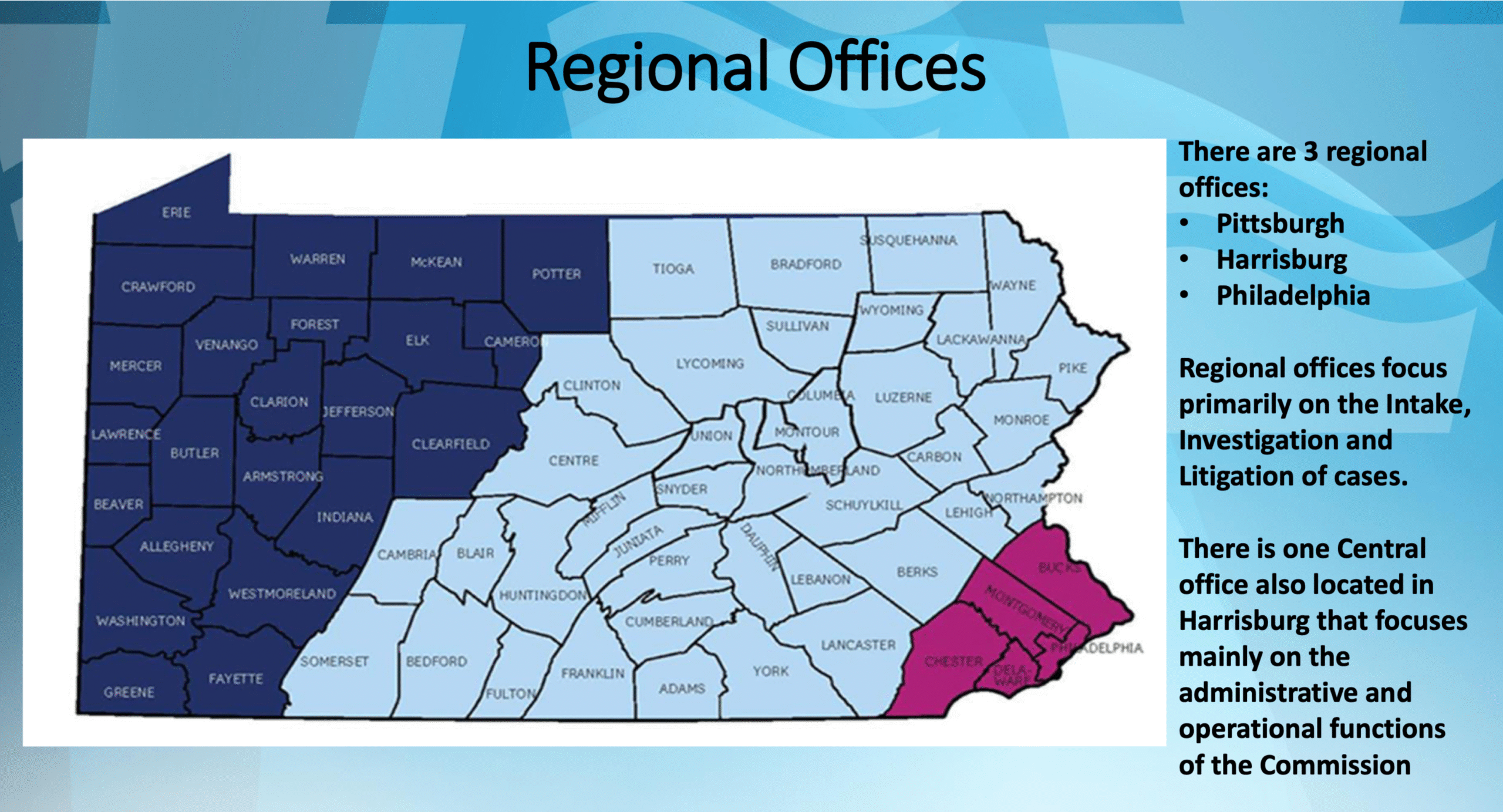
The adjudication of litigated cases is completed by the Commission itself. The process is almost identical to that prescribed by local ordinances. So, why do our counties need to have a mechanism to investigate and judge discrimination if the commonwealth already has one? The PHRC provides the following reasons for establishing local commissions:
- They know the community, organizations, and people better than the state;
- Quicker resolutions of complaints if handled locally;
- Local ordinances can cover protections NOT in the Pennsylvania Human Relations Act.
In 2023, the PHRC changed the definition of sex to include gender expression and gender identity, requiring every school district to follow its regulations with respect to discrimination. The PHRC, a part of the executive branch of government, effectively changed the meaning of duly passed legislation and did so without the needed legislative authority. On March 6, 2025, a lawsuit was filed by a few school districts and individuals against the PHRC. Petitioners are still awaiting a hearing at the Commonwealth Court.
So, why would a county human relations commission really be needed? To speed up discrimination cases? To ensure those investigating and adjudicating cases really know the people involved? Or is it to codify specific classes with language not currently in any federal or state law?
Bottom line…
It is clear that counties are taking matters into their own hands, perhaps at the behest of the Pennsylvania executive branch. Local leaders are trying to pass ordinances to codify protective language for the trans activist community because the legislative branch of the state and federal government has not done so. Is this how you want your local tax dollars spent? Investigating and adjudicating disputes that can already be reconciled at the state level? Do we need another enforcement agency to go after local businesses on the social issues of the day?
The effective date of the proposed Human Relations Commission in Chester County is December 23, 2025. But, now is the time to make your voice heard in Chester County! Call, write, and attend the County Commissioners’ Meeting on Wednesday, September 24th at 10:00 a.m. at 313 W. Market St., 6th floor, West Chester, PA. You can also attend virtually by clicking here and following the link. Let your elected leaders know what you think!
“The nine most terrifying words in the English language are: I’m from the government and I’m here to help.” – President Reagan, Aug. 12, 1986
As the Constitutional Convention ended in 1787, Benjamin Franklin was asked if the delegates produced a monarchy or a republic. Franklin replied, “A republic, if you can keep it.”
We are trying to keep this republic that we love and hold our representatives accountable to the people. Join us in that mission and share this Update with your contacts!


What Is This Really All About?
A few weeks ago we informed you about a Delaware County Human Relations Commission being proposed. It seems Chester County doesn’t want to be left behind in the movement to grow the administrative state in Southeastern Pennsylvania. Unlike Delaware County, where the County Council provided time for the public to address the Council with concerns and propose revisions, the Chester County Board of Commissioners will vote on Ordinance No. ORD-2025-03 on Wednesday, September 24, 2025, at 10:00AM. Of course the board will allow public comment, because that’s the law. Will that prevent the county from enacting this needless ordinance? It may depend on how many people actually attend the meeting. What’s in this ordinance and what’s it really about?
What Is This Ordinance?
The purpose of the Human Relations Ordinance is to provide a local governmental mechanism to investigate, conciliate, and adjudicate potential discrimination of members of protected classes as defined in the ordinance. Complaints can be filed regarding potential discrimination in employment, in housing, or in the use of any public accommodations. Most of the protections offered in the ordinance follow federal law, but some go further. Exemptions from the ordinance include certain religious and non-profit organizations under certain circumstances.
The Human Relations Commission will be made up of volunteers appointed by the Chester County Board of Commissioners. The Commission will receive reimbursement for expenses up to a budgeted amount. However, if expenses are greater than budgeted, then the County Solicitor can authorize more spending. The Commission will be given legal and administrative support from the Solicitor’s Office but other departments may be required to jump in if the Commission requires more help.
The Commission will be run through the County Solicitor’s Office. The Commission won’t have a budget of its own, so we have no idea how much the already bloated budget for the Solicitor’s Office will increase to cover this new expense. Chester County increased taxes 13% this year. How much will taxes go up in 2026 to pay for this new shadow department?
How Would it Work?
Like the Delaware County version, the Human Relations Commission will receive discrimination complaints or initiate complaints on their own for investigation and adjudication of the conduct in question. Investigators will be assigned and will have the power to issue subpoenas, collect data documents, and take sworn testimony. If the investigator determines there is no probable cause of violation of the ordinance, then the Commission can dismiss the complaint. If the investigator decides there is probable cause, then the Commission will make conciliation services available to the parties by a mediator. If mediation is unsuccessful, the accused party will be hauled before the Commission for a public hearing. The Commission will hear the results of the investigation and will decide if the accused party is innocent or guilty. If, after deliberation, the accused is found guilty, then the Commission is empowered to levy fines up to $500. Appeals could be filed with the Court of Common Pleas.
Circumventing D.C.?
The federally protected classes from Title VII of the Civil Rights Act of 1964 and the U.S. Equal Employment Opportunity Commission (EEOC) are race, color, religion, sex, and national origin. Those classes have been further defined and expanded with laws like the Americans with Disabilities Act and others. However, it appears that the sex classification is the tricky one.
The EEOC in Title VII employment practices and the Fair Housing Act for housing practices both interpret sex to include sexual orientation and gender identity as protected against sex discrimination. However, in February, the Trump Administration decided to use the strict interpretation of sex as being male or female when determining if educational institutions should receive federal funding under the Title IX Education Amendments of 1972. As a result, schools became a battleground for transgender activists. The legal battles over bathrooms and sports are still ensuing, but counties want to act now to codify gender expression and gender identity as protected classes, including in schools.
Is This Commission Needed?
Pennsylvania established the Fair Employment Practices Commission in 1955 in an effort to combat racial discrimination in hiring. In 1961, the name changed to the Pennsylvania Human Relations Commission (PHRC) with broader jurisdiction to include public accommodations including schools. The PHRC has three regional offices to investigate and litigate discrimination cases.
The adjudication of litigated cases is completed by the Commission itself. The process is almost identical to that prescribed by local ordinances. So, why do our counties need to have a mechanism to investigate and judge discrimination if the commonwealth already has one? The PHRC provides the following reasons for establishing local commissions:
In 2023, the PHRC changed the definition of sex to include gender expression and gender identity, requiring every school district to follow its regulations with respect to discrimination. The PHRC, a part of the executive branch of government, effectively changed the meaning of duly passed legislation and did so without the needed legislative authority. On March 6, 2025, a lawsuit was filed by a few school districts and individuals against the PHRC. Petitioners are still awaiting a hearing at the Commonwealth Court.
So, why would a county human relations commission really be needed? To speed up discrimination cases? To ensure those investigating and adjudicating cases really know the people involved? Or is it to codify specific classes with language not currently in any federal or state law?
Bottom line…
It is clear that counties are taking matters into their own hands, perhaps at the behest of the Pennsylvania executive branch. Local leaders are trying to pass ordinances to codify protective language for the trans activist community because the legislative branch of the state and federal government has not done so. Is this how you want your local tax dollars spent? Investigating and adjudicating disputes that can already be reconciled at the state level? Do we need another enforcement agency to go after local businesses on the social issues of the day?
The effective date of the proposed Human Relations Commission in Chester County is December 23, 2025. But, now is the time to make your voice heard in Chester County! Call, write, and attend the County Commissioners’ Meeting on Wednesday, September 24th at 10:00 a.m. at 313 W. Market St., 6th floor, West Chester, PA. You can also attend virtually by clicking here and following the link. Let your elected leaders know what you think!
“The nine most terrifying words in the English language are: I’m from the government and I’m here to help.” – President Reagan, Aug. 12, 1986
As the Constitutional Convention ended in 1787, Benjamin Franklin was asked if the delegates produced a monarchy or a republic. Franklin replied, “A republic, if you can keep it.”
We are trying to keep this republic that we love and hold our representatives accountable to the people. Join us in that mission and share this Update with your contacts!
Related Posts
Drop Box Disaster
Election Day Voting
Election Process Software Vulnerabilities