Childhood Vaccines: Who Knows Best?
In 1980, the Centers for Disease Control and Prevention (CDC) recommended that children receive immunizations against seven (7) diseases, which consisted of 23 doses. As of 2024, their guidance was to inoculate against seventeen (17) diseases with 84 vaccine doses. In 45 years the number of diseases against which the government decided children needed protection more than doubled, while the vaccine doses increased over 350%! Why so many? Was there suddenly an explosion of new diseases and viruses in the world? Were these vaccines thoroughly tested to include long term negative effects on the children taking them?
These were some of the questions Secretary of Health and Human Services (HHS) Robert Kennedy, Jr. asked when he assumed that office in 2025. Many in the medical community scoffed at the idea of being questioned on the vaccine issues, since Secretary Kennedy is not a doctor. However, sometimes we get a feeling that something just isn’t right. We can’t put our finger on what it is, but something bothers us. Mr. Kennedy was put in a position to dig for answers to some of these nagging questions.
Who should we trust in choosing preventative healthcare for our children: the CDC, the American Medical Association, the American Academy of Pediatrics (AAP), our doctors? Who benefits from introducing more vaccinations into pediatric healthcare protocols?
CDC – Following the Science
In 2020 and 2021 we were told to “follow the science.” However, the American people became skeptical about the healthcare industry during the COVID-19 lockdowns. When “medical experts” provide guidance that doesn’t make common sense (ex. stay in your home, wear a mask, do not go outside, 6-foot distancing, etc.), then people begin to question the veracity of the entire healthcare community. As a result, some parents refused to adhere to the pediatric vaccine schedule provided by the CDC and approved by the AAP. With fewer children inoculated, there was a rise in the number of occurrences of highly-contagious diseases like measles.
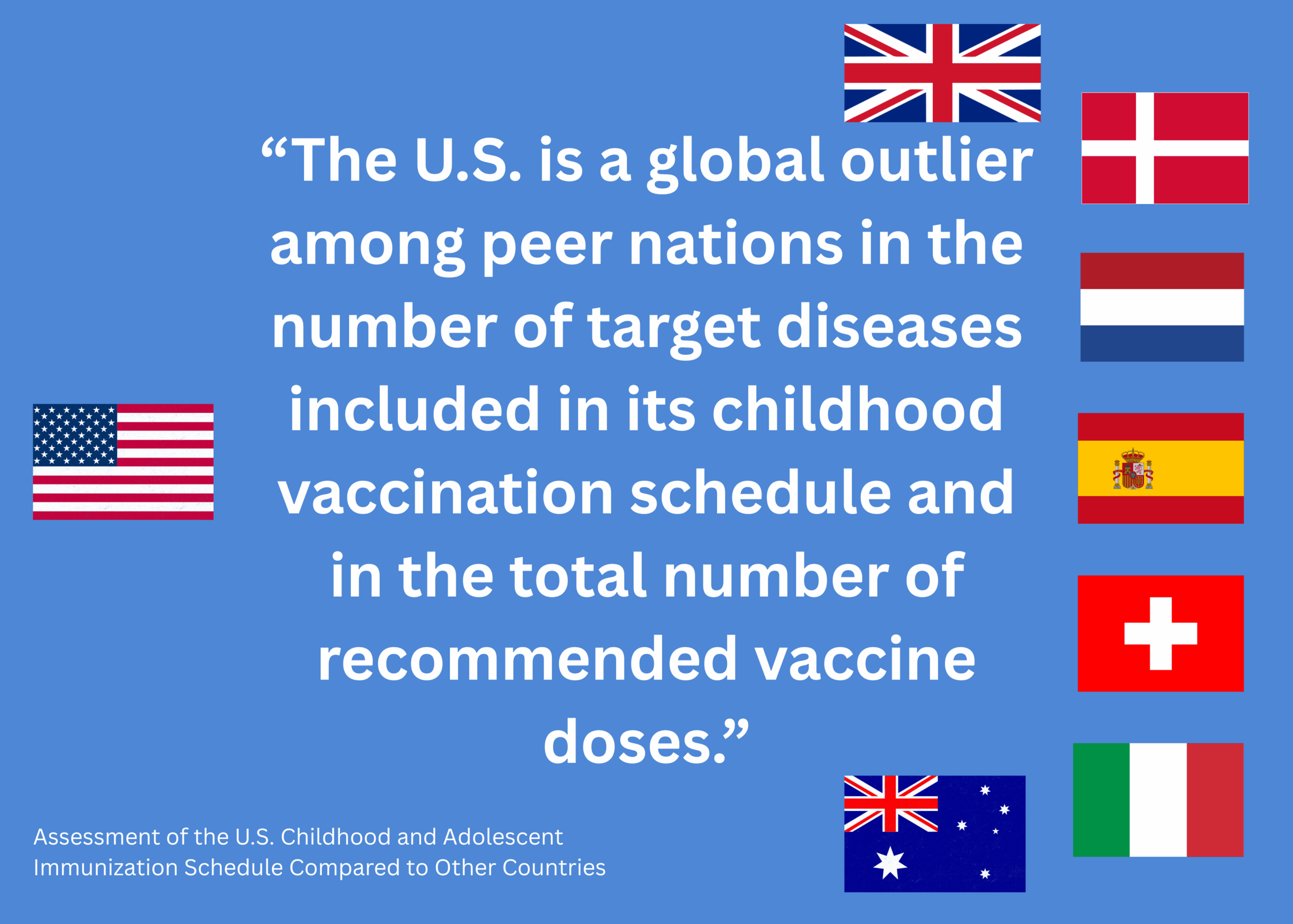
In an effort to regain the trust of the American people regarding vaccines, on December 5, 2025, President Trump asked the CDC and HHS to align the childhood vaccination schedule with scientific evidence and the best practices of peer, developed countries. Following an investigation, a report was issued which found that the U.S. childhood vaccine regimen included many more diseases and doses than our peer countries in Europe and elsewhere. Below is a chart from the report indicating the vaccine schedules in the 20 peer countries with the total vaccine doses, number of diseases, and the number mandated (due to school admission, etc.) in the right columns.
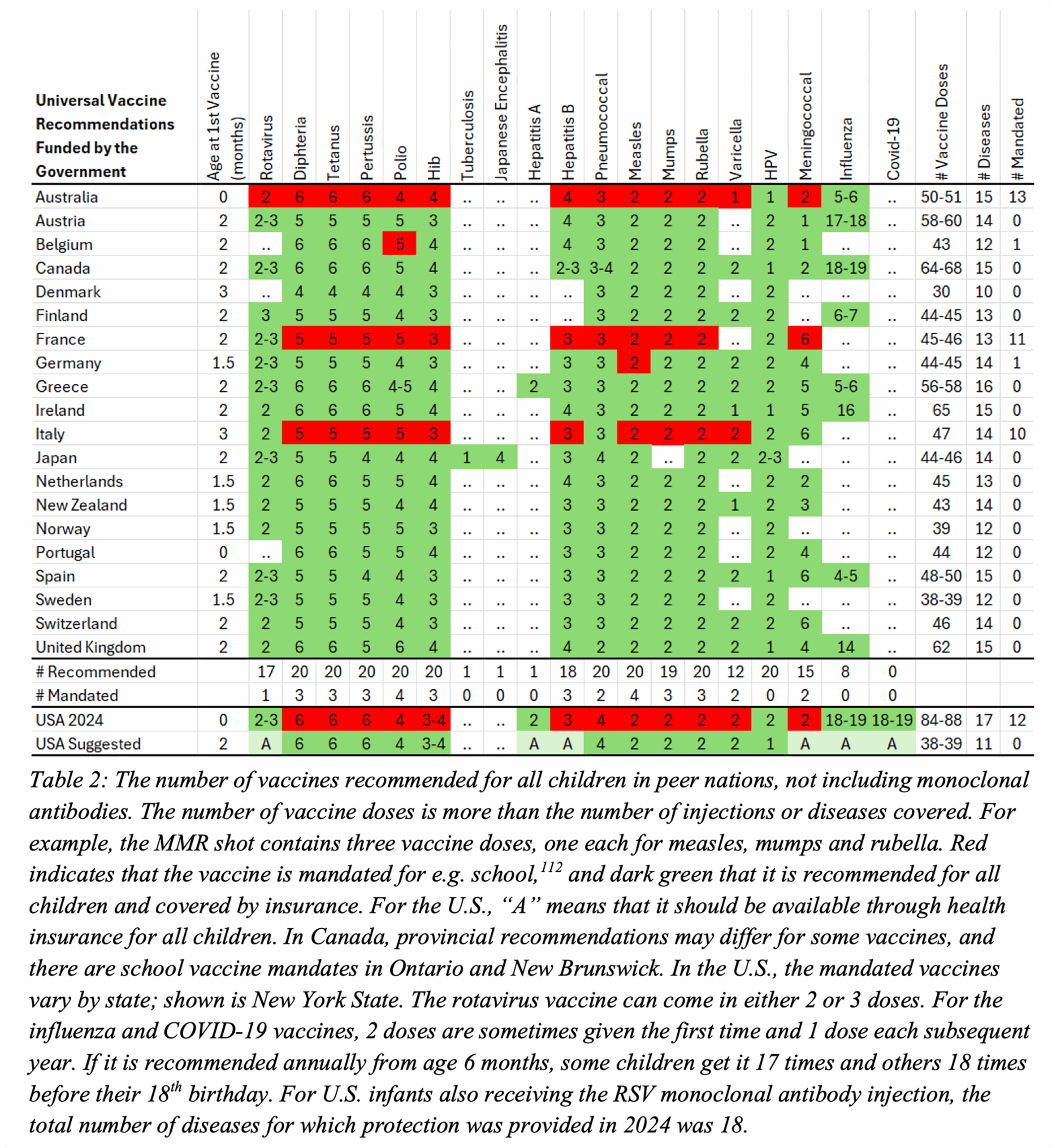
To come into closer alignment with the other 20 peer nations, the CDC changed the pediatric vaccine schedule on January 5, 2026 to include eleven (11) diseases, down from 17, for all children. In addition, it provides recommendations for high risk groups and consideration for shared clinical decision making, so doctors and parents can determine what’s best for a child in special circumstances.
American Academy of Pediatrics
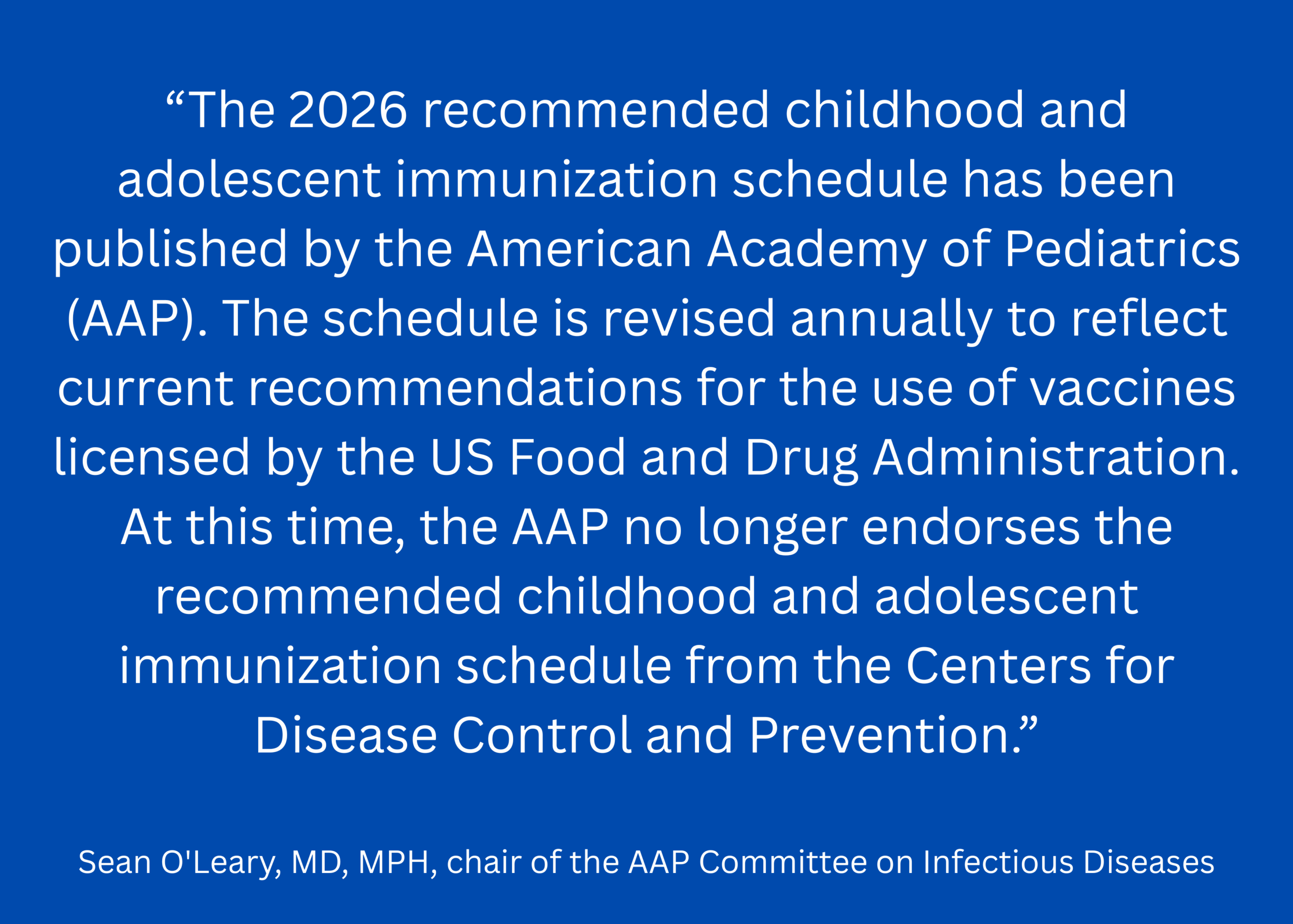
The AAP believes that the CDC did not “follow the science.” As such, the AAP “no longer endorses” the CDC 2026 schedule for childhood and adolescent vaccinations. On January 26, 2026, the AAP released its 2026 schedule with an accompanying policy statement. This organization’s recommendations continue to immunize against 17 diseases with dozens of doses starting at birth.
The AAP seems to take an aggressive approach to protecting children from viruses and diseases without regard to the risk profile of the patient. For example, AAP suggests that all babies receive the Hepatitis B vaccine as newborns, while the CDC takes into account the maternal test results and shared clinical decision-making prior to injection. The AAP follows the guidance of two peer countries, while the CDC aligns with 18 countries on this vaccine. What happened to allowing children to build natural immunities to viruses? That doesn’t seem to be discussed.
COVID-19 & Influenza Vaccines
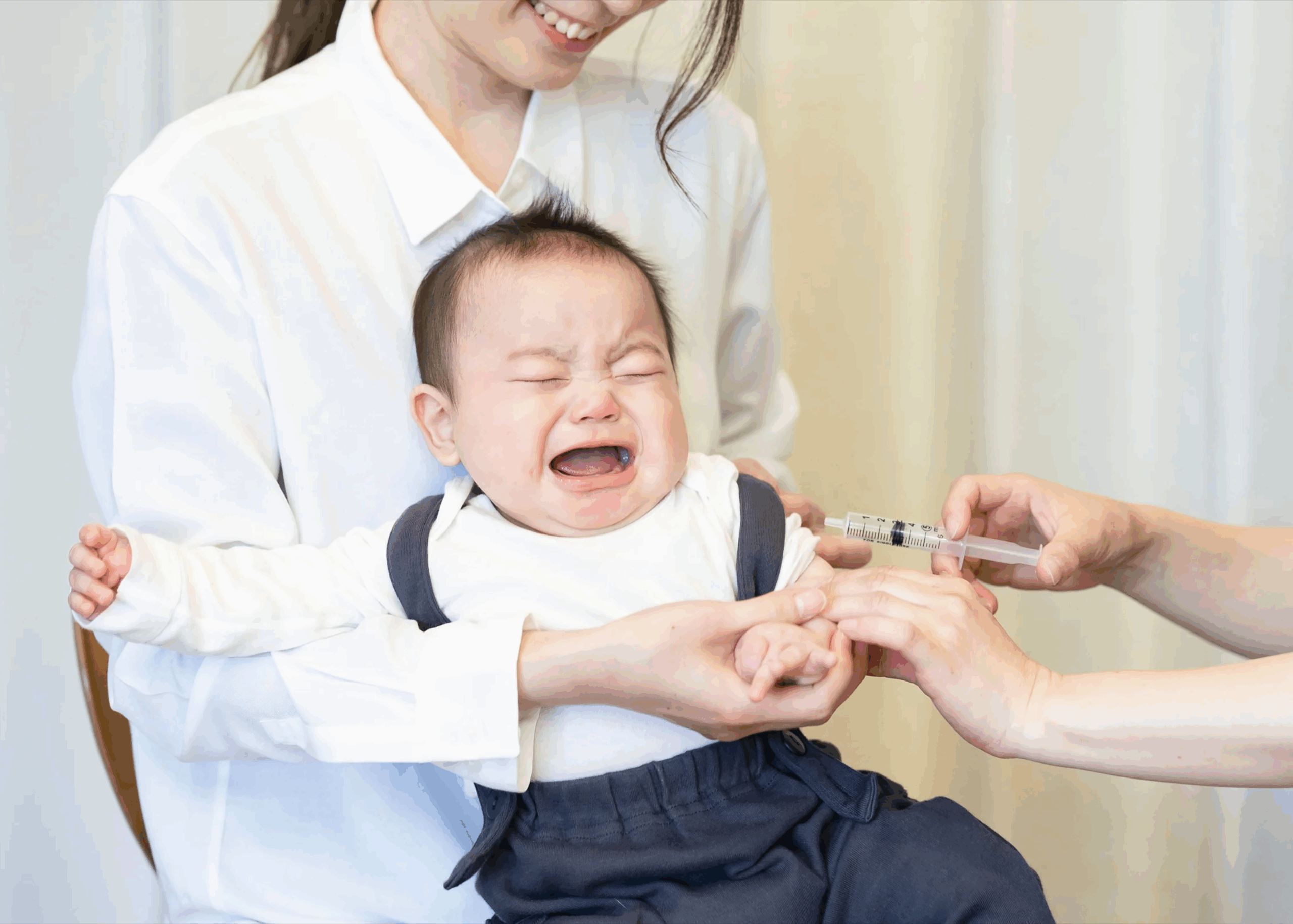
The COVID-19 and Influenza vaccines add to the differential in dosing between the United States and our peer countries due to the number of doses provided.
Depending on the manufacturer of the COVID-19 injection, children could be looking at up to four shots before the age of 4. No other peer country includes the COVID-19 vaccine on its recommended lists, as studies have shown it to be ineffective in children.
Additionally, there are only eight peer countries who recommend the influenza vaccine for children and only four who suggest it almost every year from birth: Austria, Canada, Ireland, and the United Kingdom. The AAP suggests the influenza vaccine every year through 18 years of age.
Together, these vaccines add almost two dozen shots which the AAP continues to recommend for children and adolescents, but which most other countries do not. Why would the AAP continue to suggest vaccines that may not be effective, may not be needed, or may cause side effects?
AAP Guilty of RICO Violations?
On January 21, 2026, a non-profit organization, Children’s Health Defense, and five other plaintiffs filed a lawsuit against the AAP, alleging violations of the Racketeer Influenced and Corrupt Organizations Act (RICO). The RICO statutes have most notably been associated with incarcerating mafia leaders, but it was also used to expose the nefarious actions of the tobacco industry.
The CEO of Children’s Health Defense, Mary Holland, claims the AAP “is a front operation in a racketeering scheme involving Big Pharma, Big Medicine and Big Media, ready at every turn to put profits above children’s health. It’s time to face facts and see what the AAP is really about.” The plaintiffs allege a lack of comprehensive safety testing on many childhood vaccines and retribution against doctors who express concerns or do not follow the AAP protocols. Additionally, the filing asserts that the organization worked to conceal findings in studies that showed negative effects from vaccines. Finally, the suit also alleges financial relationships between the AAP and pharmaceutical manufacturers.
NOTE: The AAP sued HHS Secretary Kennedy last year over changes to recommendations for COVID-19 vaccinations for children and pregnant women. That lawsuit was updated to include the changes in the CDC 2026 vaccine schedule.
DISCLOSURE: Robert F. Kennedy, Jr. is the former chairman of the Children’s Health Defense.
We’ll be watching these cases!
Bottom line…
None of the vaccinations removed from the CDC’s childhood and adolescent vaccine schedule have been banned for distribution by pediatricians. In fact, they will continue to be covered by federal medical insurance programs and the Affordable Care Act if they are administered to patients. The new CDC guidelines encourage doctors to analyze their patients’ situations and needs prior to robotically injecting babies with various pharmaceuticals. Ultimately, parents must decide what is best for their children, not the CDC, the AAP, or the doctors — parents.
If the Children’s Health Defense lawsuit allegations are true and the AAP is colluding with the pharmaceutical industry, then the 67,000 member organization must be dismantled. Doctors must remember their Hippocratic Oath – first DO NO HARM! Putting profits before the wellbeing of our children is SICK!
As the Constitutional Convention ended in 1787, Benjamin Franklin was asked if the delegates produced a monarchy or a republic. Franklin replied, “A republic, if you can keep it.”
We are trying to keep this republic that we love and hold our representatives accountable to the people. Join us in that mission and share this Update with your contacts!