Funding Success or Failing Less?
Philadelphia vs. SEPA
Philadelphia is unlike other areas in southeastern Pennsylvania in that every aspect of government is run through the city. There are not multiple boroughs, cities, or school districts as in other counties. There is only one county, one city, and one school district.
Although the school district manages its own budget, it cannot adjust the school real estate tax rate depending upon financial circumstances. This is a big difference between Philadelphia and the surrounding counties, which have that flexibility.
School District Budget

The Philadelphia School District proposed 2025-2026 budget includes $4.9 billion in expenses with only $4.6 billion in revenues. The school district receives most of its funding (54%) from the Commonwealth of Pennsylvania. City taxes provide an additional 45% of the budget. Again, this is a big difference between Philly and other school districts. For example, the West Chester Area School District obtains 82% of its revenue from local sources and only 17% from the state.
The 45% of Philadelphia school district revenues derived from the city originate from the following:
- Real Estate Taxes (56.5%)
- City Grant to Schools (13.5%)
- Business Use & Occupancy Taxes (10%)
- “Other” city tax & non-tax revenue (20%)
As with the City Council and the city budget, school board directors did not cut expenses to balance the school district’s budget. Instead, district leaders and members of the Philadelphia Federation of Teachers joined forces in Harrisburg to plead with legislators to provide additional funding from the state. Without additional state funding, the school board will need to use 40% of the district’s “rainy day” fund to make up the budget shortfall of $300 million.
The Philadelphia School District indicates there were great advances in proficiency and graduation rates in the last few years. During that time, the district received over $1 billion in Covid-19 funding. Now that the Covid-19 funding has ended, the district points to the achievements made while using those funds as a reason for needing additional state money. But, were students really achieving or were they failing less?
Return on Investment
A recent article by Beth Ann Rosica in Broad + Liberty indicated that the statewide average spend per student is $23,000. According to the School District of Philadelphia’s 2024-2025 enrollment, there were 198,299 students last year. Using the same enrollment, we can estimate the district is budgeted to spend $24,710 per student in the next fiscal year. What is that price tag buying in Philadelphia? The goal is supposed to be educated students, correct?
Reading Scores
According to the All Schools profiles provided by the school district, only 34% of students grades 3 through 8 are proficient or advanced in reading as seen below.
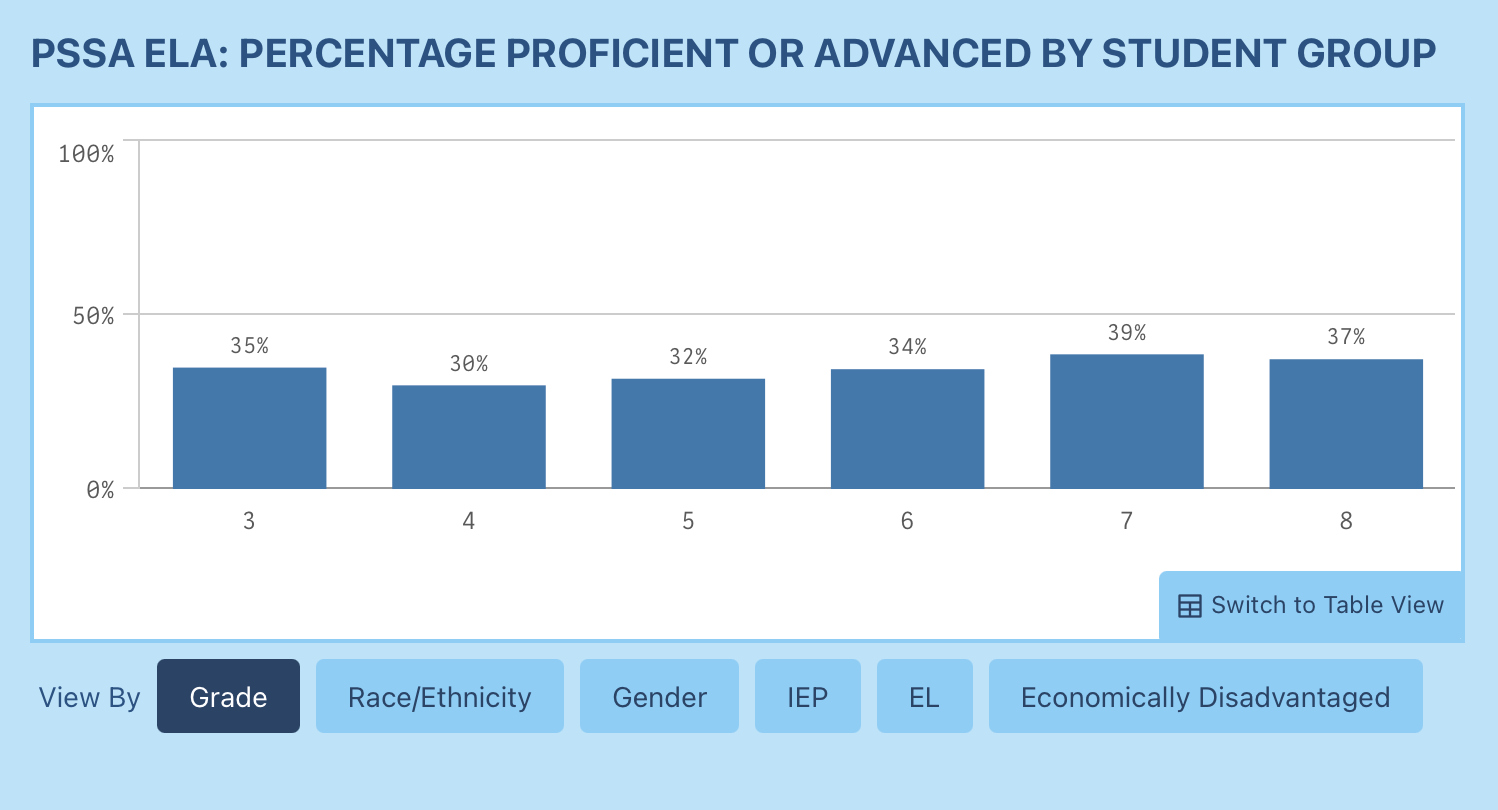
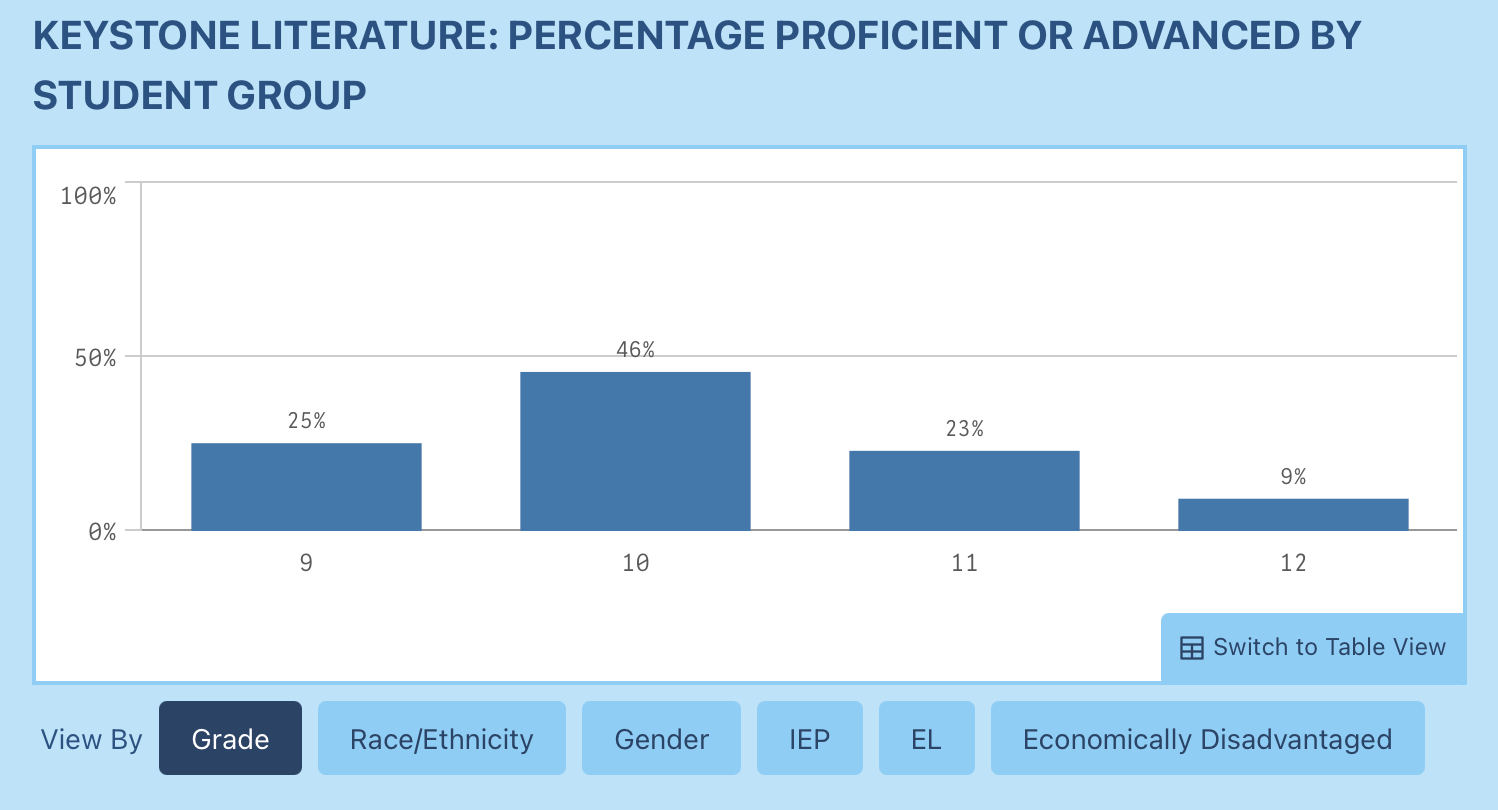
High school students fared a little better with an average of 37% reading proficiency as noted in the below chart.
Math Scores
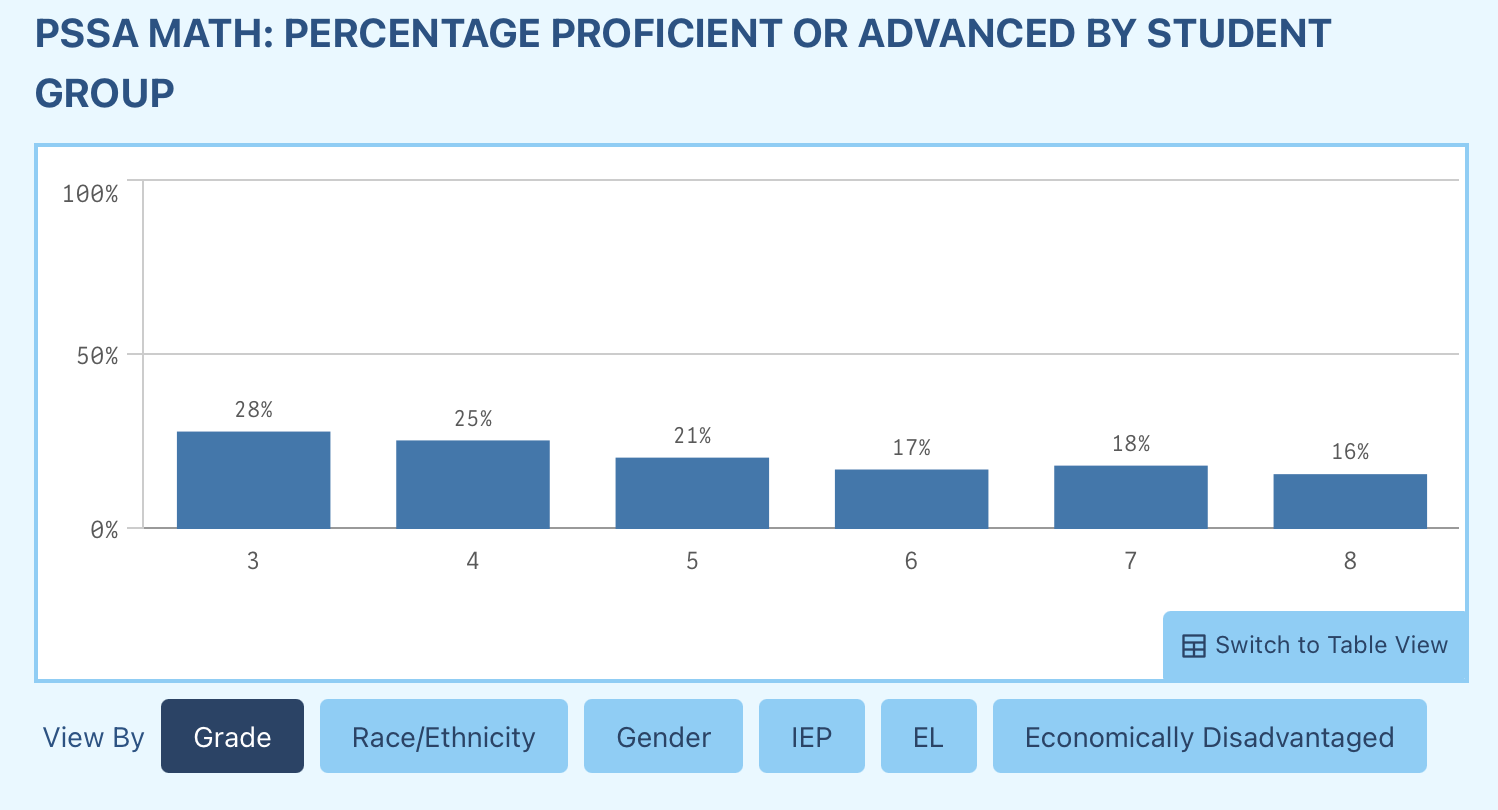
If you thought the Reading scores were bad, here are the math numbers! Students in grades 3 through 8 had an average math proficiency of just 21%! From the looks of the below chart, student understanding or retention mostly declines after 3rd grade.
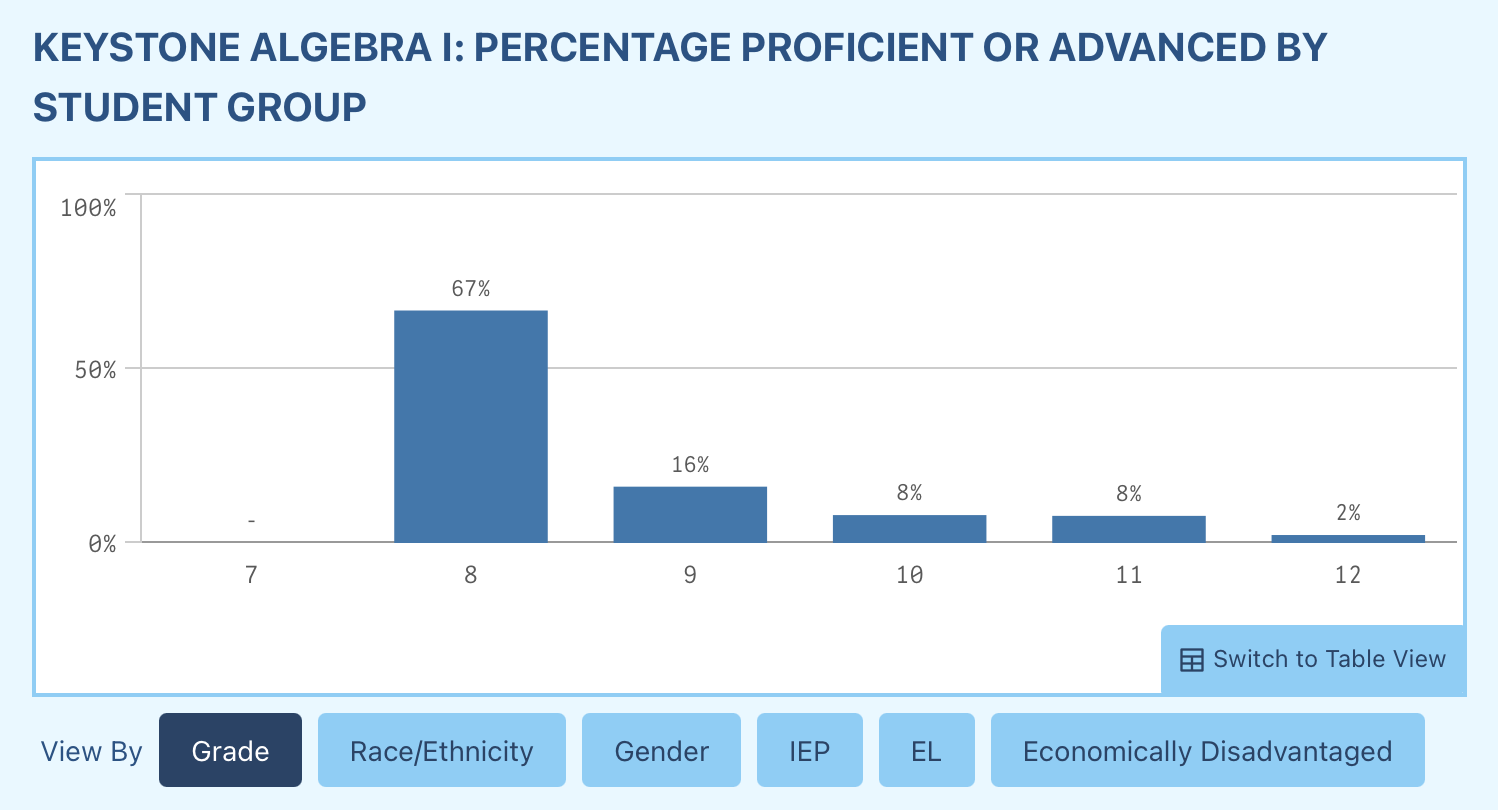
High school scores are somewhat misleading because that test is for Algebra 1 and is only taken following the course work, not every year. It seems most students take the exam after 8th grade, which is when the highest proficiency is achieved at 67%. However, the overall proficiency for the exam is an abysmal 16%!
Let’s do the math on the cost of proficiency for the 3rd through 8th graders.
The 3rd through 8th grade students comprise approximately 47% of the total enrollment for the district or 93,200 students. According to the figures for the 2025-2026 budget, $2.302 billion will be spent on those 93,200 students. If we average the reading (34%) and math (21%) proficiency for these grade levels, then we get a 27.5% overall proficiency. That means that of the 93,200 students, only 25,630 would be considered proficient in what they’ve learned. When we consider the budget for those grade levels, we find that the School District of Philadelphia is spending $89,854 per proficient student in grades 3 through 8.
That’s definitely a negative Return on Investment. Taxpayer money can be spent better elsewhere!
Bottom line…
The spending spree on Philadelphia School District being pushed by elected leaders and sustained by taxpayers across the commonwealth does not seem to have an end in sight. No one wants to be the bad guy who says, “ENOUGH!” The response is always, “We must invest in our children and the next generation!” More than $1 billion from Covid-19 funding did not bring the students even to a 50% proficiency rate. So, how much will it take? Where is the money going? Can this school district be fixed? If so, how?
We’ll be trying to answer those questions soon!
Please share this information with friends, neighbors, and contacts!
As the Constitutional Convention ended in 1787, Benjamin Franklin was asked if the delegates produced a monarchy or a republic. Franklin replied, “A republic, if you can keep it.”
We are trying to keep this republic that we love and hold our representatives accountable to the people. Join us in that mission and share this Update with your contacts!